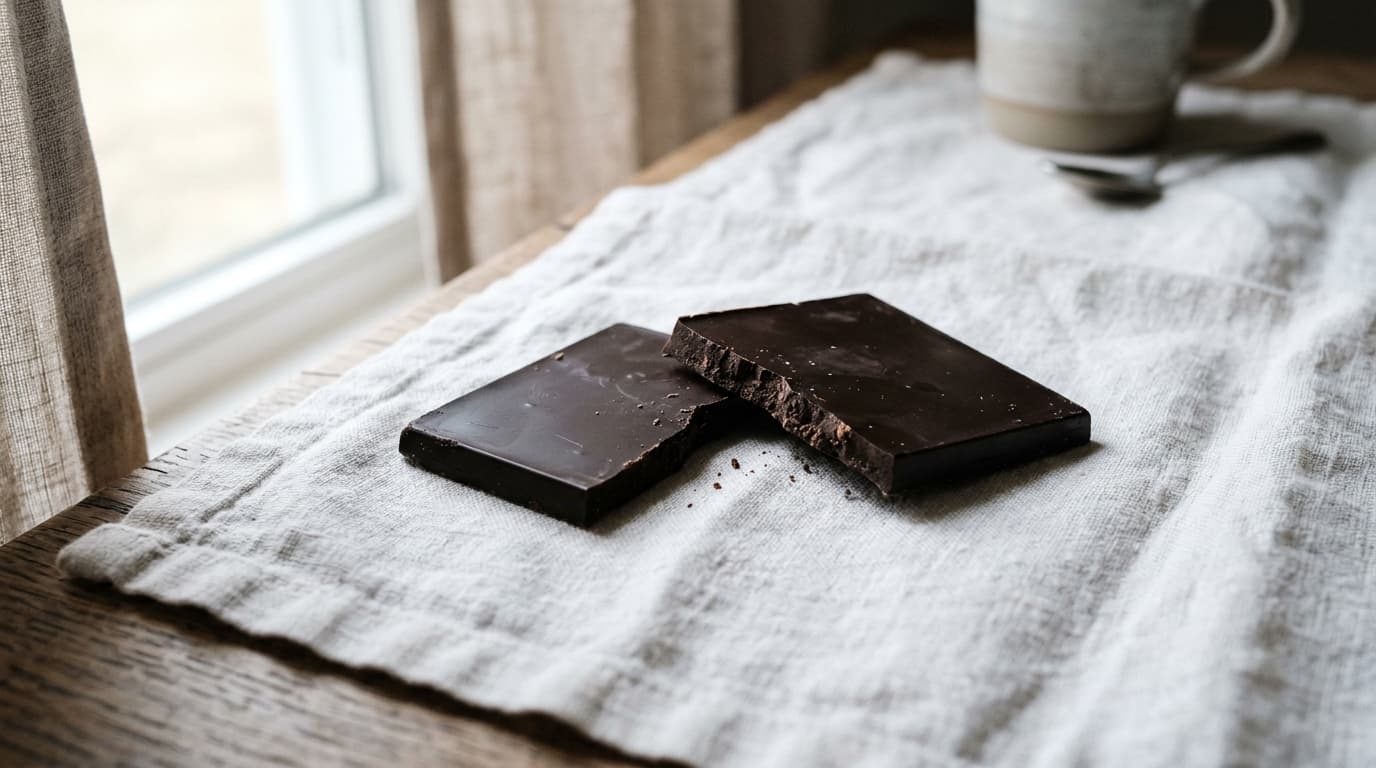
Tasting chocolate comes down to five steps: prepare the room and your mouth, look, snap while listening, smell, then bite once and let it melt. The five guides I read on 5 November 2026 agree on the order of the senses. They split on two points, whether to bite, and at what temperature.
What do five tasting guides say, side by side?
On 5 November 2026 I read five guides published by chocolate houses and one media outlet: Barry Callebaut (undated page, 2026 footer), Valrhona Collection, Le Bonbon (which summarises Victoire Finaz's method), Kaoka and Chocolaterie Morin. All of them use the same senses. None proposes the same method.
| Guide | Steps | Bite? | Temperature | Suggested order | Before tasting |
|---|---|---|---|---|---|
| Barry Callebaut | 5: sight, touch, hearing, smell, taste | bite with nose pinched, then melt | none | not specified | water between pieces, smell your own skin to reset the nose |
| Valrhona Collection | 4: sight, hearing, taste, smell | no, melt | room at 17 to 19°C | milk, then darks from least to most intense, 100% last | two hours without eating, no coffee or tobacco |
| Le Bonbon (V. Finaz) | 4: sight, smell, hearing, taste | at least two "bites", then melt | none | white, milk, dark; bars before filled sweets | a sip of water between pieces |
| Kaoka ("Guide & Conseils") | 4: sight, touch and hearing, smell and taste, aromatic notes | bite, then melt | none | from the lowest cocoa percentage to the highest | 30 minutes without tobacco, coffee or chewing gum |
| Chocolaterie Morin | 9, from choosing to noting | no, melt | none | compare origins and percentages | water, no sugary drink |
5
Guides read on 5 November 2026
1 of 5
Gives a room temperature
0 of 5
Gives a tasting duration
Should you bite chocolate or let it melt?
Both, in that order, once.
Three guides out of five want a bite before the melt, two forbid it, and nobody explains the choice. Here is my reasoning, which is a judgement call and not a measurement. According to Wikipedia, cocoa butter melts at around 34 to 38°C, roughly body temperature. A whole piece takes time to get there on the tongue, whereas a piece already broken spreads faster. One clean bite breaks the piece up, releases the smell and lets you hear the texture, and then you stop chewing.
What temperature should you taste chocolate at?
Only Valrhona puts a figure on the room: 17 to 19°C, away from the kitchen to avoid cooking smells. The Brussels chocolate house I used in our article on chocolate in the fridge places tasting between 18 and 21°C. The two ranges overlap between 18 and 19°C, and that is the one I keep.
At 18°C, sixteen degrees remain before the bottom of cocoa butter's melting range. Chocolate left near a radiator snaps soft, and Le Bonbon reads that as a sign of heat exposure. Chocolate from the fridge stays in its closed box until the wall is dry, otherwise condensation lands on it.
The five steps, gesture by gesture
The durations below are my own orders of magnitude, not published figures: no guide gives any.
- Prepare, ten minutes ahead. A room at 18 or 19°C, away from the kitchen. No coffee, tobacco or chewing gum for 30 minutes (Kaoka), ideally nothing eaten for two hours (Valrhona). A glass of room-temperature water within reach.
- Look, ten seconds. On a white sheet, as Barry Callebaut advises: smooth, glossy surface, true colour. A grey film or white streaks point to bloom, which our article on why chocolate turns white tells apart in ten seconds.
- Snap and listen, ten seconds. A clean snap signals well-tempered chocolate, according to Valrhona and Chocolaterie Morin, and a dark bar snaps louder than a milk bar, according to Le Bonbon. To understand what tempering is, see how to temper chocolate.
- Smell, twenty seconds. Rub the piece between your fingers, bring it to your nose and sniff three times, as Barry Callebaut describes. A dominant smell of sugar is a bad sign, according to Le Bonbon.
- Bite once, then melt, one to two minutes. Barry Callebaut pinches the nose to bite and melt, then releases it while breathing in to bring up the aromas. You note the attack, the heart and the finish, three moments that Morin and Kaoka echo in their own words.
How do you taste a praline, which is not a bar?
The five guides talk mostly about bars. None deals with the ballotin.
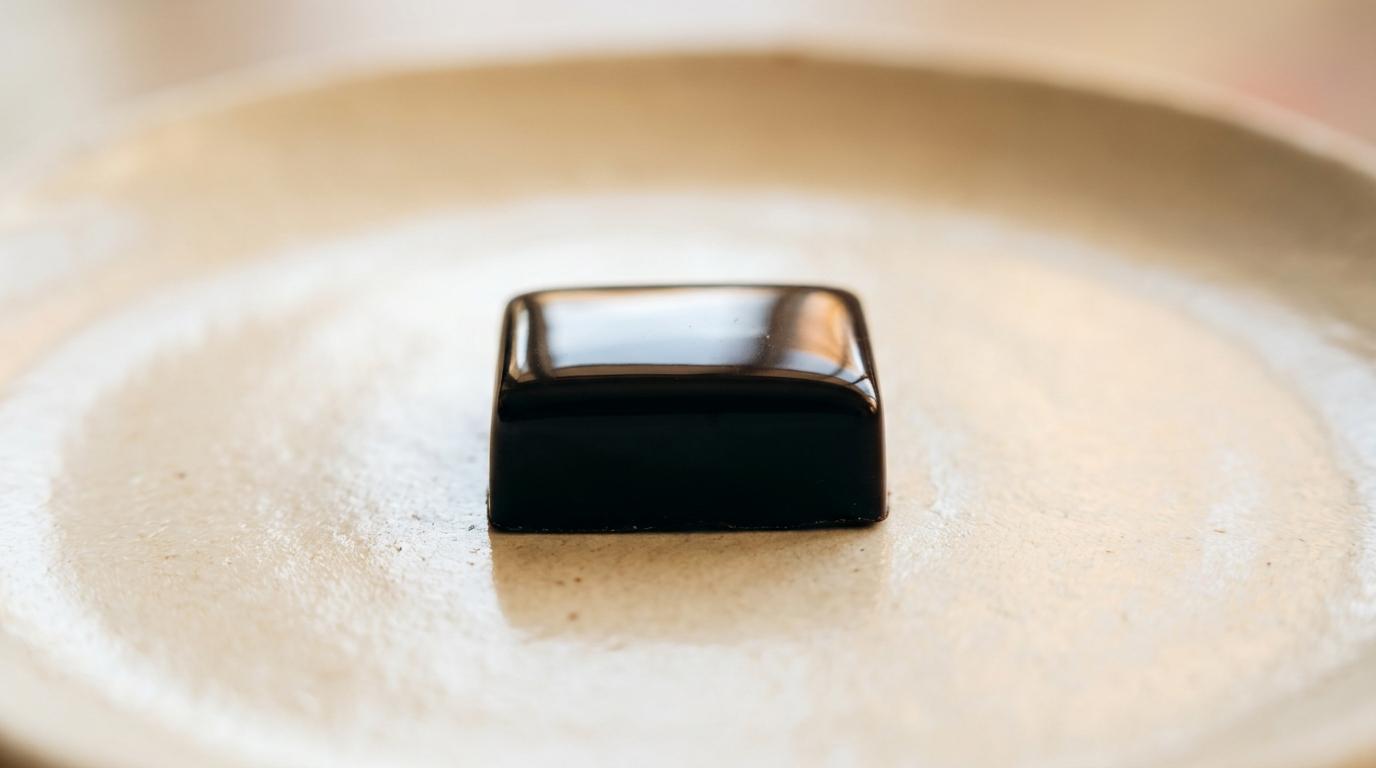
A praline has a shell and a filling, and Belgian law requires only 25% chocolate in the bite (royal decree of 19 March 2004, detailed in our article on praliné, pralin and praline). So I look at the shell first, glossy and free of film. I bite the praline in half: the snap of the shell happens at the first bite, and the cut shows the filling. I taste the first half through the shell, the second through the heart.
The order inside the ballotin follows Le Bonbon's rule, which puts filled sweets after bars and floral flavours before fruity, spicy, then smoky ones: from mildest to strongest, so a milk praliné before a dark ganache, liqueur and coffee at the end. Fresh ganache is eaten quickly. Leonidas sets three months as the limit for its pralines, according to the same fridge article, and an opened ballotin keeps according to our guide to storing Belgian chocolate.
In what order should you taste several chocolates?
By perceived intensity.
The three guides that talk about order contradict each other: colour at Le Bonbon (white, milk, dark), intensity at Valrhona (milk first, the 60 to 75% darks, then the blond Dulcey and the 100% last), rising percentage at Kaoka. Only the second holds with what a workshop sheet from the Cité du chocolat recalls: "the percentage of cocoa is not synonymous with aromatic power" (translated from the French). Our article on cocoa percentage explains why. Between pieces, Kaoka suggests room-temperature water or a bite of apple.
For a wine pairing, the order flips: Le Bonbon writes that the length of chocolate in the mouth often exceeds that of wine and that you should start with the wine. See chocolate and wine pairing.
What words describe what you taste?
Vocabulary is the most standardised part. On 29 January 2018 in Cologne, Barry Callebaut presented a "Consumer Chocolate Sensory Wheel" of 87 descriptors, to move tasting from an unconscious, emotional approach to a conscious, analytical one (the company's press release, in French). Le Bonbon keeps five tastes: acidity, bitterness, sweet, salt, astringency. It also distinguishes six textures: melting, creamy, coarse, floury, pasty, sticky.
The same guide lists six defects, of which here are four:
| Perceived | Possible signal (according to Le Bonbon) |
|---|---|
| Colour too black | excessive roasting |
| Overpowering vanilla | probably an artificial flavour, vanillin rather than vanilla |
| Grainy texture | a conching or crystallisation flaw |
| Mushroom notes | mould on the beans |
Five habits that spoil everything
- Tasting chocolate straight from the fridge: it mists over, and the condensation dissolves the surface sugar. It waits first in its closed box.
- Starting with the strongest, which flattens everything after it. Kaoka advises starting with the lowest percentage, and I prefer to order by perceived intensity.
- Going from one to the next without water or a pause. All five guides mention water, before or between pieces.
- Judging on the first bite, when the attack is only a third of the story. The finish, which Morin describes as lingering, can change completely.
- Tasting right after a coffee, a cigarette or chewing gum, when the palate is saturated. Kaoka waits 30 minutes, Valrhona two hours.
My call
To taste with company rather than alone, our article on chocolate workshops in Brussels helps you pick a table, and our ranking shows where to buy something to practise on.
Pages read on 5 November 2026: Barry Callebaut, Le Bonbon, Wikipedia, cocoa butter, plus the Valrhona Collection, Kaoka and Chocolaterie Morin guides cited in the table.
Pralines & spécialités comparator
Compare all pralines & spécialités side by side.
Compare now →
Frequently asked questions
Bruxelloise pur sucre, Margaux arpente les chocolateries belges depuis plus de dix ans. Ancienne pâtissière reconvertie dans le journalisme gourmand, elle goûte, compare et raconte le chocolat belge sans complaisance — des grandes maisons aux ateliers de quartier.