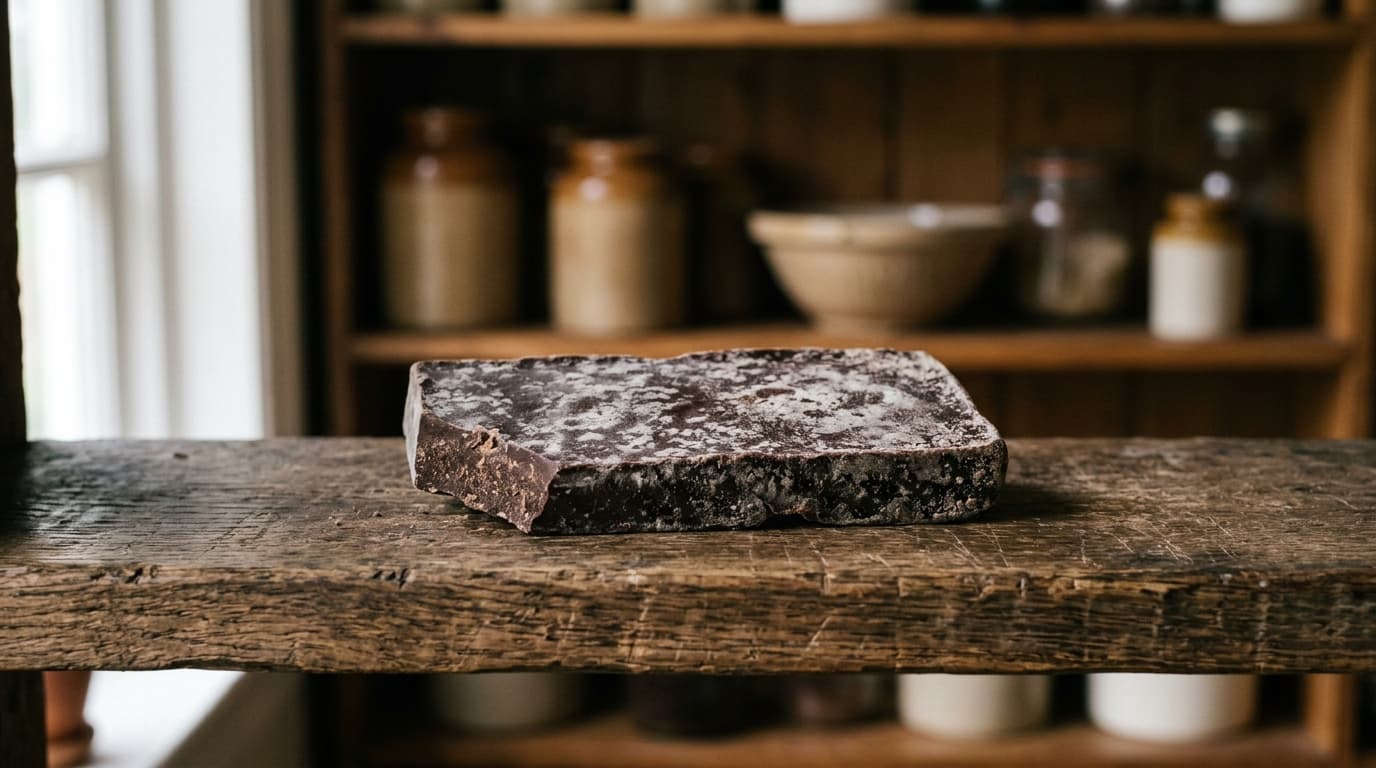
Yes, in the vast majority of cases. The date printed on a bar is a best-before date, not a use-by date: it speaks about taste, not safety. Only one family of chocolates genuinely goes off, and it is not the one you would expect.
What does the date on chocolate actually mean?
It says "best before", and those two words change everything.
Regulation (EU) 1169/2011 on food information to consumers draws a line between two wordings. "Use by" is a hard deadline, reserved for highly perishable foods: past that day the product can be neither sold nor eaten. "Best before" is a minimum durability date: beyond it, the food stays fit to eat as long as its appearance, smell, texture and taste remain normal.
Chocolate carries the second one. Always.
The reason comes down to water, or rather its absence. Bacteria need free water to multiply, chocolate offers almost none, and sugar locks up what little remains. The chocolate-sector self-checking guide published by the AFSCA, the Belgian federal food safety agency, duly files chocolate making among the very low microbiological risk activities. Chocolate does not rot. It tires.
How long does chocolate stay good after its date?
Everything hinges on the filling.
| Chocolate found | Margin past the date | Verdict |
|---|---|---|
| Sealed dark bar | 12 to 18 months | Edible, flatter aromas |
| Sealed milk or white bar | 6 to 12 months | Edible, slight cooked-milk note |
| Praliné or hazelnut praline | 0 to 3 months | Smell it before biting |
| Ganache or fresh cream praline | A few days | Same day, otherwise bin it |
| Liqueur praline | 6 months and beyond | Alcohol protects, sugar crystallises |
| Opened bar, badly closed | None | The cupboard has already won |
| Couverture chocolate in a sealed bag | 12 months | Retempers without trouble |
On 14 September 2026 I found a sealed Côte d'Or dark bar at the back of a cupboard, fourteen months past its date. The snap was perfect, clean, audible. The taste had lost its top notes: no red fruit left, no clear bitterness, a dry almond and nothing behind it.
A bar past its date will not make you ill. It will make you indifferent, which for chocolate is another kind of death.
The hazelnut praline is the only one that truly goes off
Pure chocolate is stable. The hazelnut you put inside it is not stable at all, and it is the nut that dictates the life of the finished product.
Hazelnut oil is rich in unsaturated fatty acids, so it oxidises in contact with air. It turns rancid, and a rancid filling cannot be rescued: the paint-oil taste covers everything else and settles in your mouth for a good quarter of an hour. A study published in 2025 in the Journal of Food Processing and Preservation states it plainly: in a bar with whole hazelnuts, the nut limits shelf life rather than the chocolate around it.
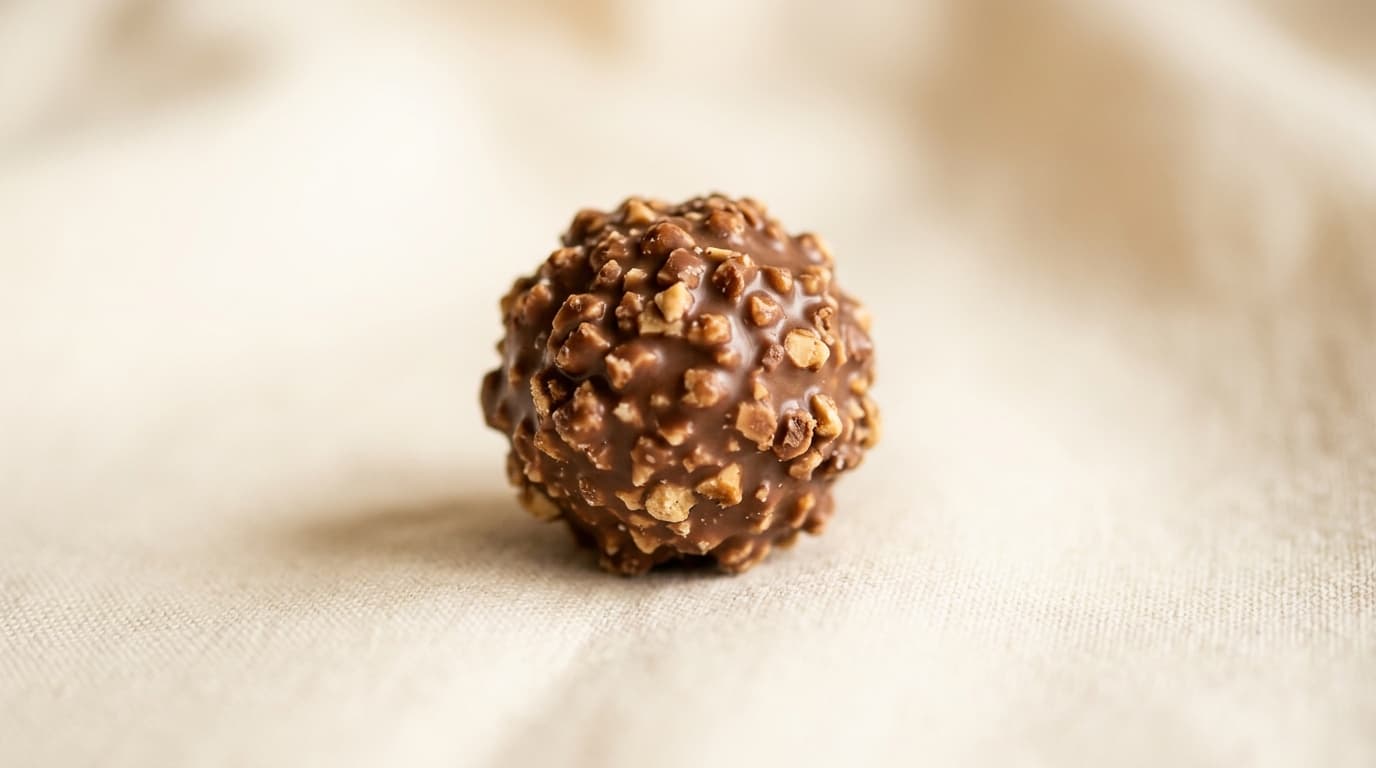
Hence a counter-intuitive ranking. Fresh cream ganache carries the shortest date but warns you honestly: it dries, it cracks, it changes appearance. Praliné lies. It stays glossy, firm, appetising, and it is already rancid.
I kept a praliné rocher from a gift box for eighteen months, because it was too pretty to eat straight away. I bit into it one Sunday in March, spat it into the sink, rinsed three times. Nothing showed.
How can you tell whether chocolate is still good?
Thirty seconds is enough, and the date is not one of the three checks.
- The eye: look for fuzz, green patches, cottony grey. A smooth or powdery white film is not mould, it is cocoa butter or sugar risen to the surface.
- The nose, before anything else: snap a square and smell the fresh break, not the wrapper. Rancidity shows up in the nose long before the mouth.
- Touch: a shell that sticks to your finger or gives way has taken on damp.
- Hearing: a healthy dark bar cracks. A dull sound betrays fat that has moved.
- The filling: a ganache shrunk inside its shell, leaving a visible gap, is past its moment.
- The first square: spitting out a doubtful chocolate costs nothing.
Neuhaus and Leonidas disagree about the fridge
On 15 September 2026 I read both official FAQ pages back to back, on the houses' own sites. They contradict each other on the most practical point of all.
Neuhaus guarantees at least four weeks from the moment the online order is placed, states that the printed date is about quality rather than safety, and firmly advises against both the fridge and the freezer. The house aims for 58 to 64 degrees Fahrenheit, which is 14.4 to 17.8 °C, at a constant temperature.
Leonidas advises eating a ballotin of fresh pralines within the month, puts the right range at 15 to 18 °C, and explicitly recommends storing chocolates with alcohol or buttercream in a cool place and eating them chilled. Where one writes "never the fridge", the other writes "the fridge, for these two fillings".
Both are right: the first is talking about a parcel shipped to a private address, the second about a fatty filling that holds better cold. What remains is the figure nobody comments on. I put a thermometer in the cupboard where I keep my ballotins, a Brussels flat with no air conditioning, door closed: 21 °C at midday on 15 September, outside any heatwave. Those four weeks hold for chocolate kept between 14 and 18 °C. Mine lives three degrees above that, like most people reading this page, and that quiet gap explains far more disappointments than missed dates.
Should you bin an expired Ferrero Rocher or Mon Chéri?
These two come up constantly, and they illustrate the filling rule.
The Ferrero Rocher is a rancidity case: whole hazelnut, gianduja filling, wafer. It has the most fragile date in the confectionery aisle, and a year-old one announces itself by smell before taste. The Mon Chéri plays the opposite game with its liqueur cherry: alcohol and sugar protect it for a long time, and what kills it is the syrup crystallising and the cherry stiffening. A sealed Lindt bar belongs in the same category as the Côte d'Or above.
When should you really throw chocolate away?
Three cases, and none of them depends on the calendar.
Visible mould, green fuzz, cottony white or black patches, usually on a damp filling or a piece of fruit. A rancid smell at the break. Traces of insects: silky threads, fine powder at the bottom of the box or tiny holes in a shell point to a chocolate moth, and then the whole packet goes, not just the affected piece.
Outside those three signals, you are holding an out-of-date chocolate, not a spoiled one.
What can you do with chocolate too old to snack on?
A dulled bar becomes excellent again the moment you heat it. Hot chocolate, tart ganache, mousse, shavings over a dessert: cream and heat wake up whatever aroma is left.
One limit only, and it is absolute. Rancidity cannot be cooked away.
To avoid getting there at all, everything is in our guide to storing Belgian chocolate. Praline, praliné and gianduja puts each term back in its place, and the story of the ballotin explains why pralines weighed in a shop carry no date at all. Our top houses are in the ranking.
Pralines & spécialités comparator
Compare all pralines & spécialités side by side.
Compare now →
Frequently asked questions
Bruxelloise pur sucre, Margaux arpente les chocolateries belges depuis plus de dix ans. Ancienne pâtissière reconvertie dans le journalisme gourmand, elle goûte, compare et raconte le chocolat belge sans complaisance — des grandes maisons aux ateliers de quartier.