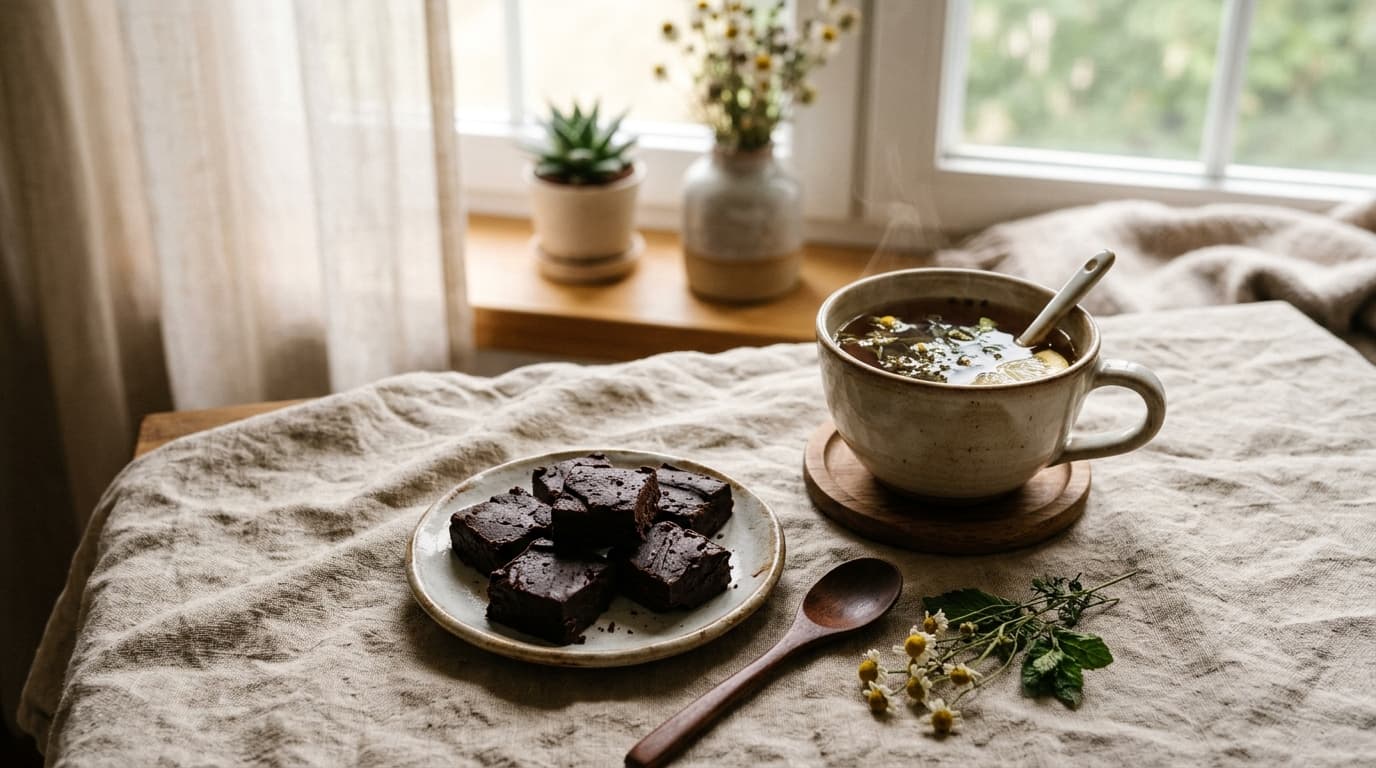
Yes, chocolate is fine during pregnancy. Caffeine is not the problem: 200 mg a day is considered safe for the child, and 100 g of dark chocolate carries about 50. The two real exclusions are the alcohol in liqueur pralines and mousse made with raw egg.
Can you eat chocolate while pregnant?
Yes, with no general blacklist but three precise reservations.
In 2015, in its scientific opinion on caffeine, the European Food Safety Authority concluded that regular consumption of up to 200 mg a day raises no concern for the unborn child or the breastfed infant. The EUFIC summary restates it in one line, with the publication date: 27 May 2015.
No official text says "this weight of chocolate a day". What you find instead are three points of vigilance: the alcohol hidden in the praline, the raw egg in homemade mousse, and the heavy metals in dark chocolate eaten in large quantities. I take them one at a time.
If your doctor has mentioned gestational diabetes, the question becomes a question of sugar, and it is settled with them. For carbohydrate content, Belgian sugar-free chocolate details what labels actually say.
How much chocolate before you reach 200 mg of caffeine?
A lot more than a reasonable person can swallow in a day.
The arithmetic is simple. EUFIC gives about 25 mg of caffeine for a 50 g bar of dark chocolate and about 10 mg for 50 g of milk chocolate. I scaled those values to the EFSA ceiling on 21 October 2026.
| Chocolate | Caffeine per 50 g | Amount to reach 200 mg from chocolate alone |
|---|---|---|
| Dark | about 25 mg | 400 g, four 100 g bars |
| Milk | about 10 mg | 1,000 g, ten bars |
| White | almost none in principle | not applicable |
Two caveats. The richer a chocolate is in cocoa, the more caffeine it holds: a 70 % bar runs around 8 mg per ten grams, a measure carried over from the article on dark chocolate benefits. And above all, the 200 mg allowance is shared. The morning coffee, the afternoon tea and the evening cola all draw on it, and that is where the ceiling gets crossed, rarely with chocolate.
These values are averages for a generic dark chocolate, not a measurement of your own bar. The content varies with the bean, the roasting and the recipe, and no Belgian or European label I have seen prints it. The calculation gives an order of magnitude, not a meter.
Liqueur pralines: no known safe dose
This is the only clear exclusion, and it has nothing to do with chocolate itself.
Santé.fr, the French public health information site, states that no amount of alcohol has been established as safe during pregnancy and recommends abstaining from any consumption (page dated 16 January 2024, consulted on 21 October 2026). The sentence makes no distinction between a glass of wine and a cognac praline.
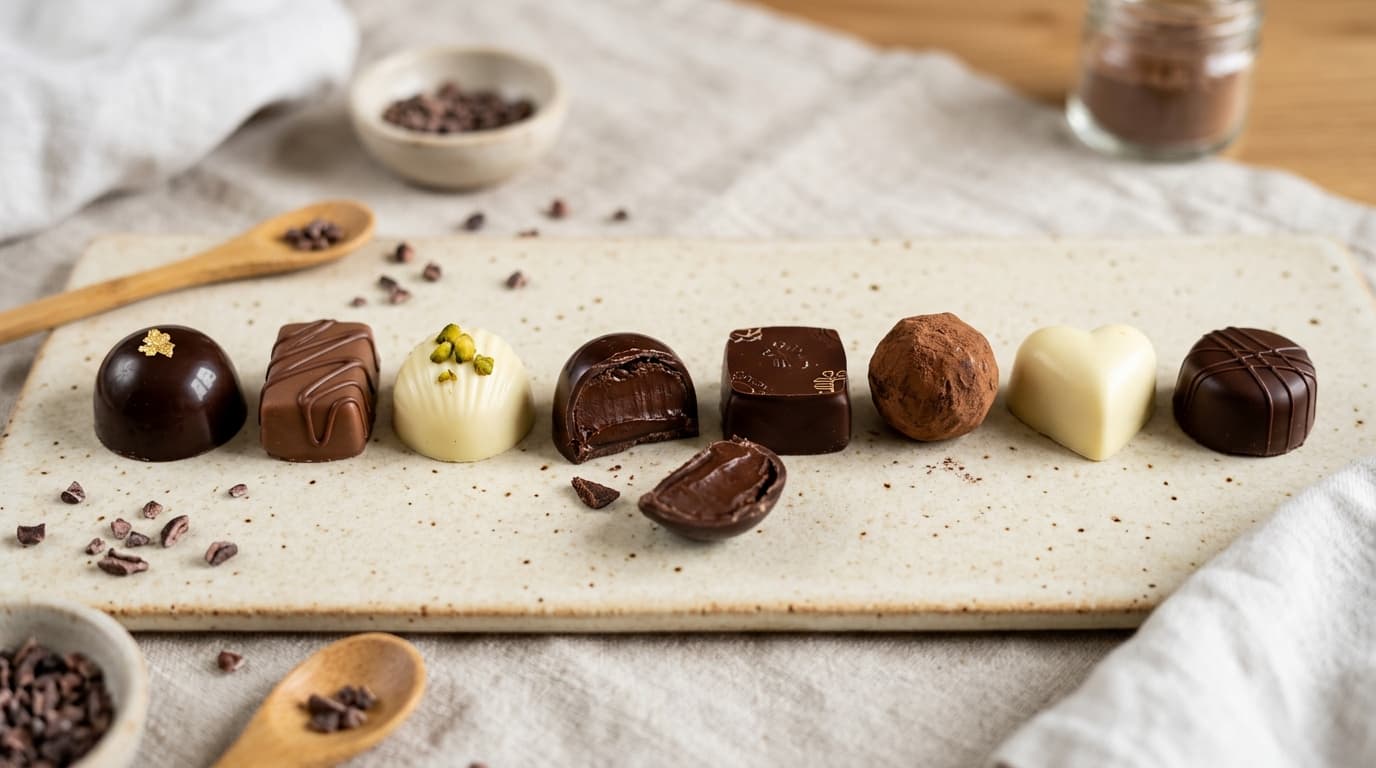
Belgian windows offer them: liqueur cherries, rum truffles, whisky-flavoured ganaches. An assortment put together at the counter carries no label per piece. What each praline contains is learned by asking, not by looking.
The size of the piece does not change the advice, whether it is the cherry on top or the little bite handed over with your coffee.
Is homemade chocolate mousse allowed?
The same day with very fresh eggs, or with no raw egg at all.
Allo Docteurs (March 2015), citing nutritionist Laurence Plumey and INRA researcher Yves Nys, gives the rule: eggs laid within the previous nine days, mousse eaten the same day, never kept twenty-four or forty-eight hours in the fridge. A media source, and a dated one: your midwife decides. A mousse whipped with cream over a ganache avoids the debate.
Dark chocolate every day: why Test-Achats advises moderation
Because the cacao tree takes up metals from the soil, and pregnancy narrows the tolerance margin.
In a text published on 21 August 2025, the Belgian consumer organisation says it found cadmium in every chocolate tested and lead in most, at levels well below European limits. It nonetheless advises pregnant women and young children not to eat it every day, because they are more sensitive, and sets 30 g a day as the maximum amount without risk for an adult.
It is not an alarm, it is an order of magnitude. Cadmium also comes from cereals and coffee, and the doses add up. The full table of European thresholds and the tolerable weekly intake is in the article on dark chocolate benefits. Above all, remember that milk chocolate generally contains less cadmium than an 85 % bar.
Hot chocolate, eclairs, white chocolate: does the same rule apply?
More or less, with a different check for each form.
| Form | In principle | Precaution |
|---|---|---|
| Dark or milk bar | Yes | Moderation for dark, no whole bar every day |
| Liqueur praline | No | No dose of alcohol established as safe |
| Homemade mousse with raw egg | No, or same day with very fresh eggs | Raw-egg-free version |
| Hot chocolate | Yes | Cocoa counts toward the 200 mg of caffeine; no added coffee or alcohol |
| Eclair, pastry entremets | In principle yes | Ask the composition: cooked cream, soaking alcohol |
| White chocolate | Yes | Very sweet; same precautions on alcohol and eggs |
How do you put together an assortment when pregnant?
In five moves, at the counter, before paying.
- Ask which pieces contain alcohol, liqueur, rum, cognac, kirsch or eau-de-vie, before choosing them.
- Set them aside, and take milk, praline paste, hazelnut, gianduja or caramel pralines instead.
- Check the production date: fresh cream pralines keep for a shorter time, the length depends on the house and the recipe, and how to store Belgian chocolate details the benchmarks.
- Count in pieces rather than in boxes: a few a day beat the whole box in one evening.
- If doubt remains about a piece or about a condition that changes your rules, call your midwife or your doctor.
Five common mistakes
- Believing you must avoid dark chocolate because of its caffeine, when it takes four bars to reach the ceiling.
- Forgetting that coffee, tea and cola draw on the same 200 mg allowance.
- Accepting a gifted praline without asking what is inside.
- Making the mousse the day before "so it sets" and eating it the next day.
- Eating the whole dark bar daily because "dark is good for you", when Test-Achats advises against daily use during pregnancy.
To pick the chocolate itself, Belgian dark chocolate details origins and percentages.
Pralines & spécialités comparator
Compare all pralines & spécialités side by side.
Compare now →
Frequently asked questions
Bruxelloise pur sucre, Margaux arpente les chocolateries belges depuis plus de dix ans. Ancienne pâtissière reconvertie dans le journalisme gourmand, elle goûte, compare et raconte le chocolat belge sans complaisance — des grandes maisons aux ateliers de quartier.