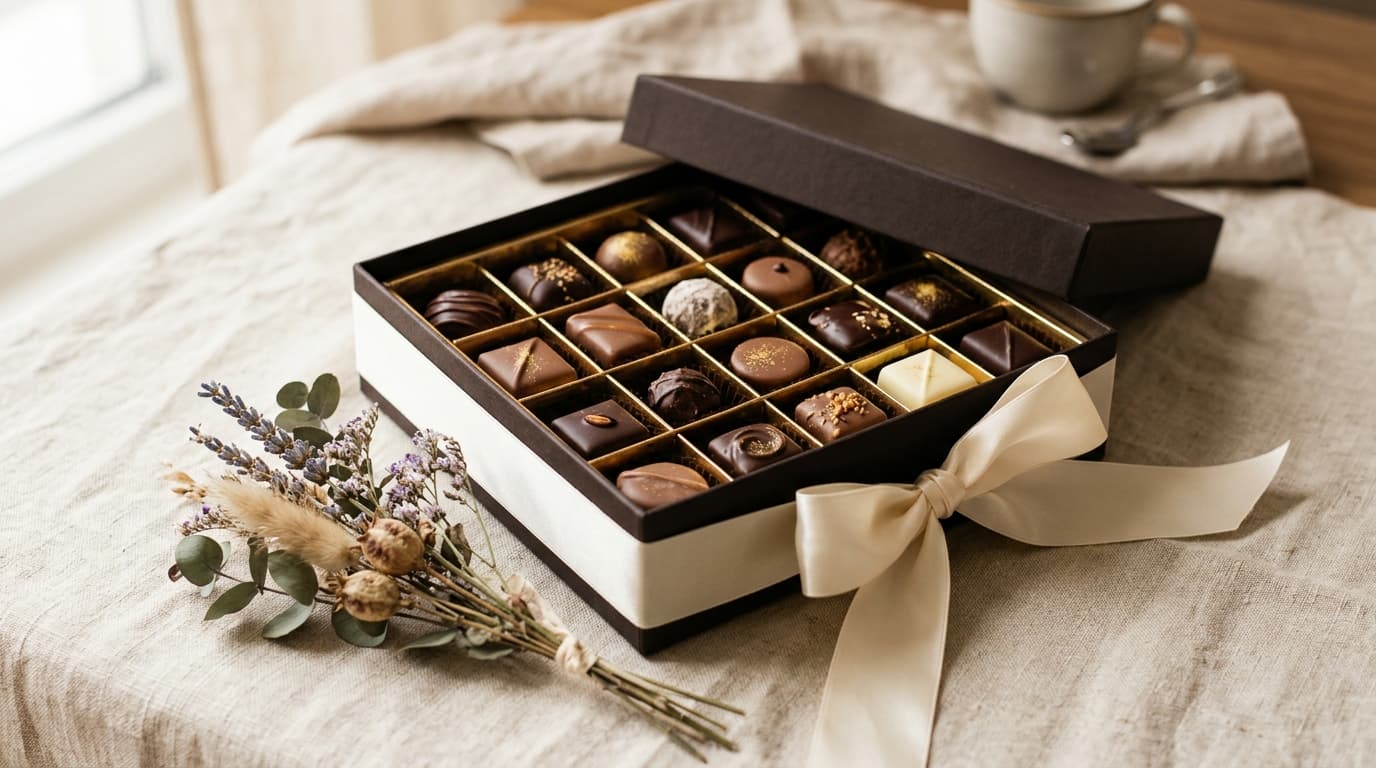
In December 2023, RTBF recorded Saint Nicholas figurines between €10.60 and €250 a kilo, from discount to bean-to-bar. Since then, the average price of the festival's chocolate has risen another 41%, according to Test-Achats. Here are the figures, dated, and enough to fill a gift bag for under €9.
Why does a figurine cost between €10.60 and €250 a kilo?
Because you are not buying the same object. On one side, an industrial mould produced by the million. On the other, a craft-made piece, sold by the piece and at the weight of a small gift.
The comparison by the programme "On n'est pas des pigeons" (RTBF, 5 December 2023) is the only complete Belgian survey I found. I set it beside two prices I read myself on 31 October 2026.
| Figurine | Price per kilo | Source and date |
|---|---|---|
| Lidl, Favorina | €10.60 | RTBF, December 2023 |
| Aldi | €16.00 | RTBF, December 2023 |
| Delhaize | €18.40 | RTBF, December 2023 |
| Carrefour Classic', 205 g | €20.00 | RTBF, December 2023 |
| Libeert | €30.00 | RTBF, December 2023 |
| Milka | €30.00 | RTBF, December 2023 |
| Leonidas | €40.00 | RTBF, December 2023 |
| Ferme de l'Arnoy (Carrefour) | €75.00 | RTBF, December 2023 |
| Neuhaus | €86.00 | RTBF, December 2023 |
| Marcolini, bean-to-bar, Madagascar vanilla | €250.00 | RTBF, December 2023 |
| Leonidas, 500 g "Saint Nicholas" ballotin at €29.15 (not a figurine) | €58.30 | e-shop page, 31 October 2026 |
| 200 g milk figurine at €18.50, The Belgian Chocolate Makers (Brussels, bean-to-bar) | €92.50 | shop page, 31 October 2026 |
Two limits are plain to see. The RTBF survey is three years old, and I found no published 2026 price for Neuhaus or Marcolini: their €86 and €250 are therefore not today's. As for my two 2026 lines, the first is an assortment of pralines and the second a single product: they show an order of magnitude, not a ranking.
One point holds. Between the cheapest and the dearest, there is a factor of 23.
Has Saint Nicholas chocolate really risen faster than the rest?
Yes, and by a wide margin. Test-Achats (4 November 2025) calculates that the average price of Saint Nicholas chocolate was 26.8% above 2024 and 41.3% above 2023. The most telling example fits in three till-receipt lines.
| Superchoc figurine, 250 g | Price | Price per kilo |
|---|---|---|
| October 2023 | €1.59 | €6.36 |
| October 2024 | €2.09 | €8.36 |
| October 2025 | €3.99 | €15.96 |
The price per kilo is my calculation. It shows that in two years the cheapest figurine more than doubled, +151%. Aldi and Lidl showed the same €3.99 in 2025 for their cheapest 250 g, and Libeert started at €36 a kilo, against €30 two years earlier.
Cocoa alone does not explain everything, far from it: I covered that in why chocolate prices don't come down. But nobody puts a number on the exact share, and I will not do it for them.
The shape costs more than the bean
A Saint Nicholas chocolate is often the same product as its neighbour on the shelf, with a mould and a ribbon added. DH's figures (3 December 2024) show it on two supermarket products.
The 90 g Milka figurine cost €2.19, or €24.33 a kilo, against €14.90 a kilo for the standard bar at €1.49 per 100 g: about 63% more for the same brand. Kinder Surprise eggs went from €43.79 a kilo in ordinary packaging to €62.38 in Saint Nicholas packaging, 42% more.
DH announces 50% for Kinder; my own calculation, on its per-kilo figures, gives 42%. I keep mine.
None of this says the figurine is a bad buy. It serves a ritual, and the ritual is the reason to buy it. But the surcharge is not in the chocolate.
A milk figurine contains at least 25% cocoa, whatever the maker
That is the law, not a sales pitch. Directive 2000/36/EC sets a minimum of 25% total dry cocoa solids for milk chocolate, and that floor applies to the figurine at €10.60 a kilo as to the one at €250. RTBF also noted that the compositions were practically similar across the brands compared.
Five lines to read when you turn the box over:
- cocoa butter or a vegetable fat as reinforcement, since the directive tolerates up to 5% in chocolate (see palm-oil-free chocolate);
- the cocoa percentage, which is missing from the page of the Brussels figurine I read, although its origin (Haiti) is stated;
- allergens: the Leonidas ballotin lists milk, almonds, soy, wheat, sesame, pistachios and barley malt, with possible traces of walnuts;
- net weight, often lower than the size of the box suggests;
- the presence of a colouring: the Brussels figurine contains one (E129), probably for the cape.
I have not tasted any of these figurines this year. So I will not tell you which is best: what the price does not say is settled at the tasting.
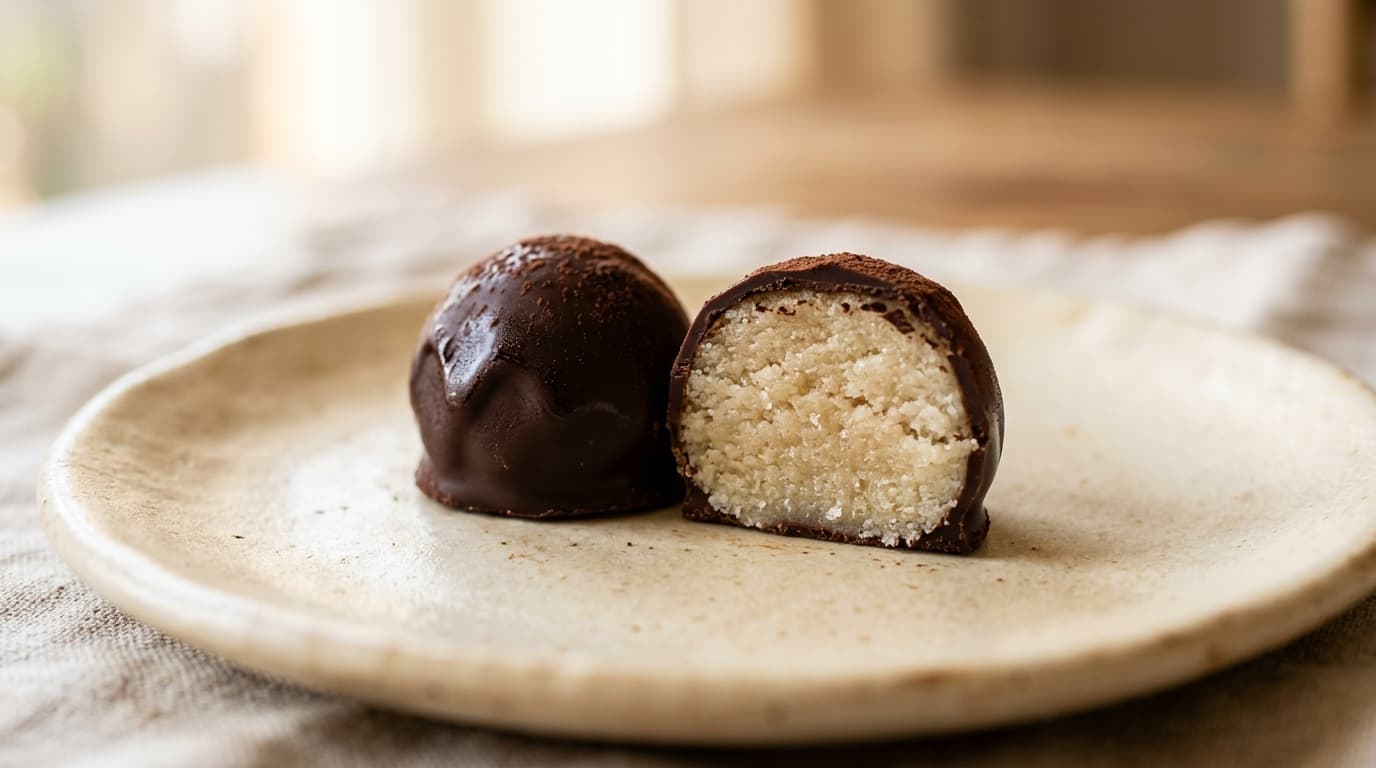
Who makes the supermarket figurines?
Libeert, in Comines, is one of the big names. The house, founded in 1923 and run by the fourth generation since 2020, announced in its 21 October 2024 press release that it had produced 4.58 million Saint Nicholas figurines that year, about half a million more than in 2023. Recommended retail prices: €1.25 to €16.69.
It says it uses neither palm oil nor unsustainable cocoa, claims I cannot verify. It also makes premium bars for retailers' own brands.
That is the scale: at several million pieces, a mould pays for itself quickly, and the craftsman's figurine plays in another category.
How do you put together a Saint Nicholas gift bag for under €9?
The traditional bag does not contain only chocolate. Elle.be (6 November 2025) groups figurines, marzipan and speculoos in its selection. Test-Achats, for its part, tracks tangerines, speculoos and marzipan, which lets us price the rest of the bag, in October 2025:
| Item | Reference price | Quantity | Amount |
|---|---|---|---|
| Entry-level milk figurine | €3.99 per 250 g | 250 g | €3.99 |
| Tangerines | €3.49 a kilo | 500 g | €1.75 |
| Saint Nicholas speculoos | €7 to €10 a kilo | 250 g | €1.75 to €2.50 |
| Total | €7.49 to €8.24 |
It is a calculation of my own, on October 2025 prices, which ignores 2026. It is enough to size up the stakes, however: the bag stays affordable as long as you keep a standard figurine and do not replace the marzipan, which, as a retailer's own brand at 50% almonds or more, was priced around €10 to €11 a kilo.
At a chocolatier, the 200 g figurine I checked costs €18.50, more than four times the entry-level price of €3.99, for 50 g less. The bag then changes category.
Should you buy before 6 December or wait for the promotions?
If the figurine is for a specific child, buy early: the choice narrows as the date approaches.
If the goal is a price, promotions exist: in 2023 RTBF found they had started before the date, the figurine going out of season on 6 December. The bet holds for supermarkets, less for a chocolatier producing in small batches.
For storage, allow 45 to 120 days at the Brussels chocolatier whose page I read, below 18 °C. Our guide on how to store Belgian chocolate covers the rest.
The limits of this survey
Three, and they are better stated. Most of my prices come from press between 2023 and 2025. I checked only two online pages in 2026, on a single day. And I ran no blind test, so no judgement of taste.
For wider year-end gifts, chocolate to give at Christmas and the guide to advent calendars take over, and supermarket chocolates cover the entry level.
Sources read: Directive 2000/36/EC on EUR-Lex, Test-Achats' inflation survey (in French), RTBF's comparison (in French) and DH's investigation (in French). The product pages cited are those of the Leonidas e-shop and of the Brussels chocolate maker.
Cadeaux & idées comparator
Compare all cadeaux & idées side by side.
Compare now →
Frequently asked questions
Bruxelloise pur sucre, Margaux arpente les chocolateries belges depuis plus de dix ans. Ancienne pâtissière reconvertie dans le journalisme gourmand, elle goûte, compare et raconte le chocolat belge sans complaisance — des grandes maisons aux ateliers de quartier.