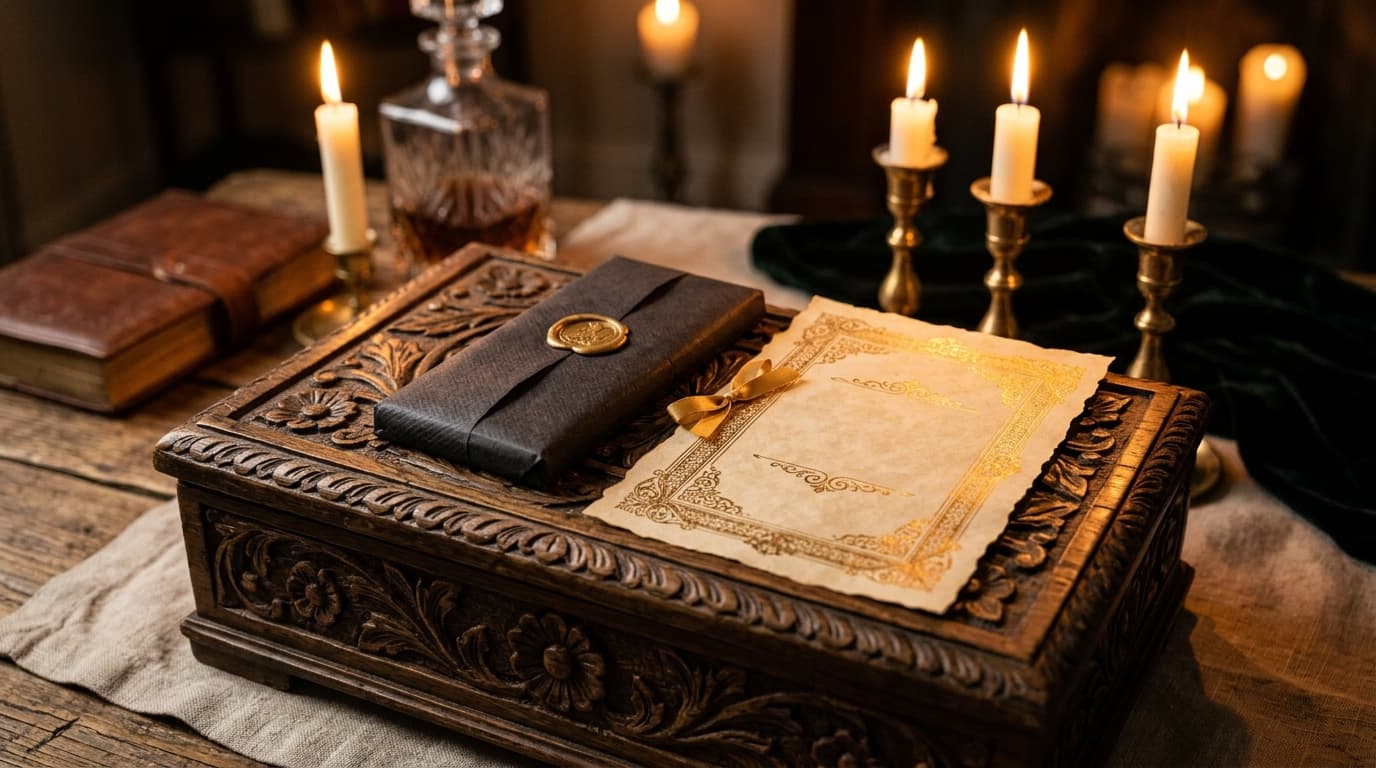
The most expensive chocolate actually on sale is a 50 gram bar priced at $490, which works out at $9,800 a kilo. Everything else fits into a grid of four criteria, only one of which can be calculated. The other three are told as stories, and that is where prices take off.
Four criteria, and only one of them calculates
The word prestige, sitting alone on a lid, means nothing. It breaks down into four verifiable things.
| Criterion | Measure used | Verifiable by the reader |
|---|---|---|
| Price per kilo | listed price divided by stated weight | yes, if the weight is published |
| Rarity of the bean | variety and origin named on the pack | partly, depending on traceability |
| Standing of the house | royal warrant, age, titles | yes, public sources |
| Exclusivity | limited run, numbering, certificate | yes, announced by the house |
Three of those four lines rest on the word of the house. Price per kilo can be recalculated in ten seconds with a calculator, which is why I put it first. A box that refuses to give its weight refuses the only check you can carry out yourself.
Rarity of the bean is the most interesting and the most manipulable of the four: a house that prints Criollo on its packaging says something verifiable, a house that prints exceptional bean says strictly nothing, and the price gap between those two phrasings is often zero while the information gap is total. Exclusivity, by contrast, is checked in a single line: a run announced as limited carries a number, a numbering and sometimes a certificate, or else it is not limited.
European law helps a little. Directive 2000/36/EC sets out what may legally be called chocolate, with its minimum dry cocoa solids, but it says nothing about prestige. It protects the word, not the price.
That leaves the standing of the house, the only criterion you cannot eat. A royal warrant, a founding date, a craftsman's title: these check out in a few minutes and weigh heavily on how a gift is received. They say nothing about what is inside the box. I keep them in the grid because they matter to the person receiving, not because they predict the taste.
What does a kilo of prestige chocolate really cost?
Between €188 and $9,800. That gap is not a nuance, it is a change of nature.
Prices and weights recorded on 3 September 2026 in each house's own online shop, in euros for Europe and dollars for Ecuador.
| Box | House | Listed price | Stated weight | Price per kilo |
|---|---|---|---|---|
| Masters Series El Jaguar, 500 units | To'ak, Ecuador | $490.00 | 50 g | ≈ $9,800 |
| Case of 63 Marie-Antoinette pistoles | Debauve et Gallais, Paris | €68.00 | not stated | cannot be worked out |
| Souvenir Collection Belgium, 16 pieces | Neuhaus, Brussels | €31.50 | 163 g | ≈ €193 |
| Malline Pralines, 36 pralines | Pierre Marcolini, Brussels | €44.00 | 234 g | ≈ €188 |
| Malline of palets fins | Pierre Marcolini, Brussels | €32.00 | not stated | cannot be worked out |
Two lessons come out of that table, and neither is the expected one. First, the two Belgian houses sit within five euros a kilo of each other, which makes any prestige ranking between them based on price absurd. Second, the gap between the top and the bottom of the column is more than fiftyfold, while the raw material itself never varies by anything like that much.
To'ak sells 50 grams for $490, and publishes the detail
The Masters Series El Jaguar was, on 3 September 2026, the documented summit of the market.
The listing is precise: 75% cacao, 50 grams, Grand Cru matured four years, a run of 500 units. The accompaniment weighs heavily in the price. An original print by Ecuadorian artist Enriquestuardo, etched on zinc and finished with hand-applied gold leaf, with a certificate of authenticity signed by the artist. A Spanish Elm wood case holding an encapsulated cacao bean from the ancient trees of Piedra de Plata. A tasting plate of wood and engraved bronze. A tasting utensil. Two booklets.
The cacao itself is Ancient Nacional, certified heirloom by the Heirloom Cacao Preservation Fund. The house says it pays up to 700% above the local price for wet cacao, which fits the positioning but cannot be audited from outside.
I have not tasted it. At $490 for 50 grams, nobody should claim to have done so without proof, and I would rather say it than imply otherwise. The price does, however, visibly pay at least as much for the object as for the chocolate: take out the print, the wood and the encapsulated bean, and a 50 gram bar is what remains.
A prestige box often charges more for its container than for its contents.
Debauve et Gallais, apothecary to Marie-Antoinette
The standing criterion is best illustrated by this house.
Sulpice Debauve was a pharmacist. To ease the queen's headaches he mixed chocolate with the remedy and invented the first chewable chocolate in history, which Marie-Antoinette named the pistole. The house, founded in 1800 on rue des Saints-Pères in Paris, still presents itself as chocolatier to the kings of France. Each pistole carries an engraving inspired by the queen's jewellery.
The case of 63 pistoles is listed at €68. The weight appears nowhere on the product page: not in grams, not even as a per-piece indication. There is no way, then, to know whether that €68 stands for €150 or €400 a kilo.
The story is solid. The figure is missing.
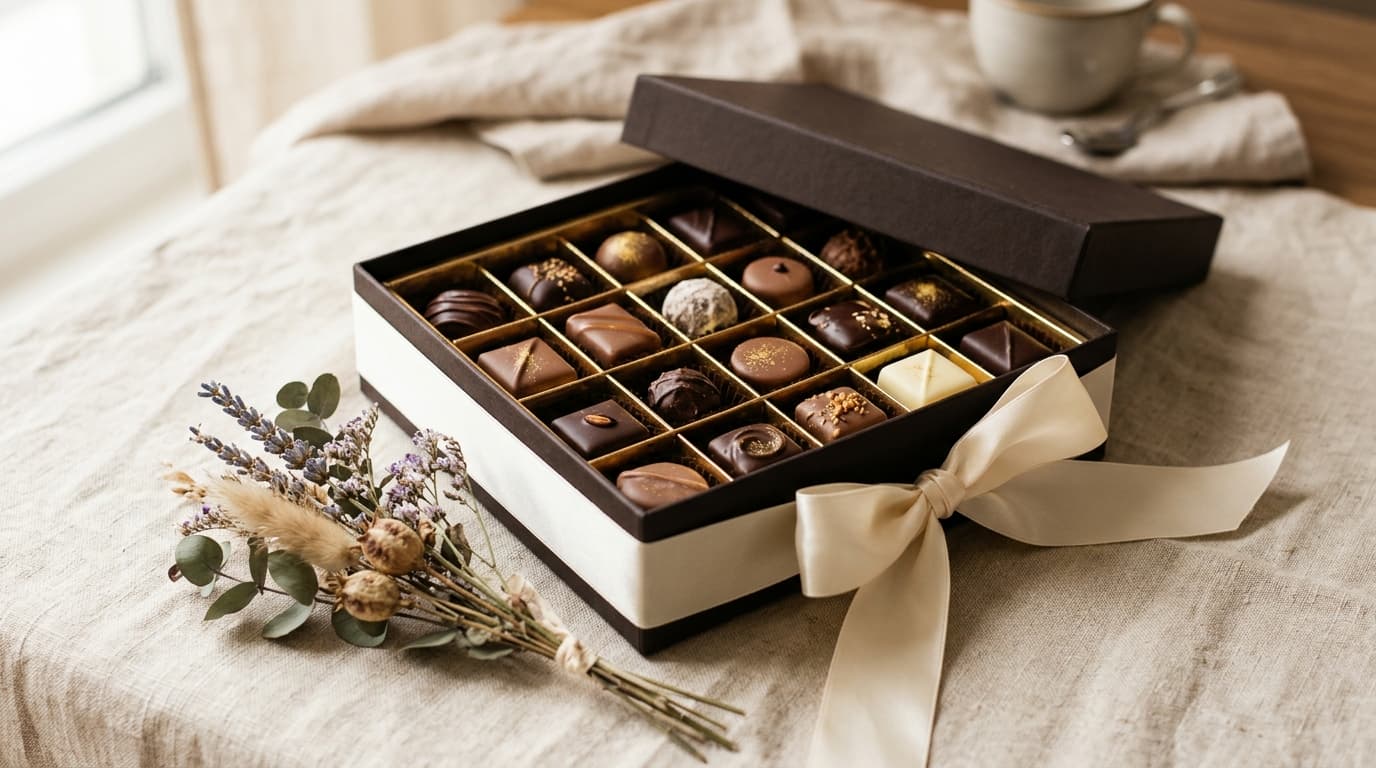
Why do half the houses hide the weight?
Because weight is the one figure that reduces prestige to arithmetic.
Of the five boxes recorded for this article, two publish no weight, and they are the two whose messaging leans hardest on heritage and craft. The correlation is far too small to prove anything, but it has been constant for as long as I have been recording shop windows.
The items a listing needs to carry before a box belongs in a serious ranking:
- net weight in grams, packaging excluded;
- number of pieces, and ideally their average weight;
- origin or variety of bean, whenever the house makes an argument of it;
- size of the run, whenever it is announced as limited;
- the date the price was recorded, which is my job rather than theirs.
With no weight, a box drops out of the table or moves to a mention with no figure. Two houses often cited in luxury chocolate lists meet that fate here. Fritz Knipschildt's La Madeline au Truffe, a Périgord truffle under dark couverture, was around $250 a piece when Forbes ranked it in 2019, but it appears in no current verifiable catalogue today. Amedei, in Tuscany, built its reputation on Porcelana, one of the rarest beans in the world, and earns its place in any conversation about rarity: with no official price recordable on the day I write, it stays out of the table.
Marcolini loses on price per kilo, and wins elsewhere
At €188 a kilo, the Malline Pralines is the cheapest box in my table. It needs saying plainly: on price, Pierre Marcolini is not first, it is last, and To'ak dwarfs the scale by a factor of fifty.
That particular ranking does not bother me, because price per kilo measures a commercial position rather than a skill.
On the second criterion, the bean, the relationship reverses. Almost every European luxury chocolatier buys couverture from a manufacturer, usually Valrhona or Barry Callebaut, then works that material. Marcolini has selected, roasted and conched its own beans since 2001, with full autonomy from bean to bar since 2009, at La Manufacture at 39 place du Grand Sablon. On the standing criterion, the house is a warrant holder of the court of Belgium, a mention it displays at the foot of its online shop, as does Neuhaus.
On tasting, the 36 piece malline delivers three stated textures, crunchy, soft and mousse, across pralines of Piedmont hazelnut, almond, Iranian pistachio and Vietnamese cashew. These are bare pralines with no chocolate shell, which is a real position to take: nothing hides an over-sweet praline, and this one is not. The Vietnamese cashew, with its hint of fleur de sel, is the one I save for last. In the Sablon window, it is the box I recommend when someone asks for one.
Two reservations all the same. The first is a storage question: the house states an optimal eating window of 45 to 90 days and storage below 18 °C, which rules the malline out of the gifts you buy three weeks early and forget on a living room shelf in September. The second is format: 234 grams for €44 is still a box for two, and I have seen it handed to a table of six several times, where it reads as mean when it is simply mis-sized.
The bean-to-bar argument also needs putting in its place. Roasting your own beans does not guarantee a better praline; it guarantees that a decision about flavour is taken inside the house rather than bought in 10 kilo bags. The difference is real, but it is industrial rather than gustatory, and an excellent chocolatier working Valrhona couverture will turn out a better bonbon than a mediocre bean-to-bar maker. The bean criterion says where the material came from. It does not say what was done with it.
Which box can you give without ruining yourself?
A box between €30 and €50 covers almost every situation, and the rest belongs to another budget.
Below €180 a kilo in Belgium you leave the artisan segment and enter quality industry, which is nothing to be ashamed of but changes the nature of the gift. Above €400 a kilo you are mainly paying for the case, the run and the story. Between those two lies everything the Belgian houses know how to do, and it is a surprisingly narrow band.
One last word on the word rare. A bean is rare because the tree yields little, not because the house decides so. Ecuadorian Nacional, Venezuelan Porcelana, Chuao: those names point to real volumes, tiny and verifiable. When a lid announces an exceptional bean without ever naming it, the prestige is in the typography.
To choose without a prestige grid, our guide to giving Belgian chocolate starts from the recipient rather than the price. The cacao price surge, for its part, weighed far less on these labels than people assume, and our article on the price of cacao gives the sum. And to choose between the Belgian houses themselves, everything is in our ranking of Belgian chocolatiers and in our guide to which Belgian chocolatier to choose.
Cadeaux & idées comparator
Compare all cadeaux & idées side by side.
Compare now →
Frequently asked questions
Bruxelloise pur sucre, Margaux arpente les chocolateries belges depuis plus de dix ans. Ancienne pâtissière reconvertie dans le journalisme gourmand, elle goûte, compare et raconte le chocolat belge sans complaisance — des grandes maisons aux ateliers de quartier.