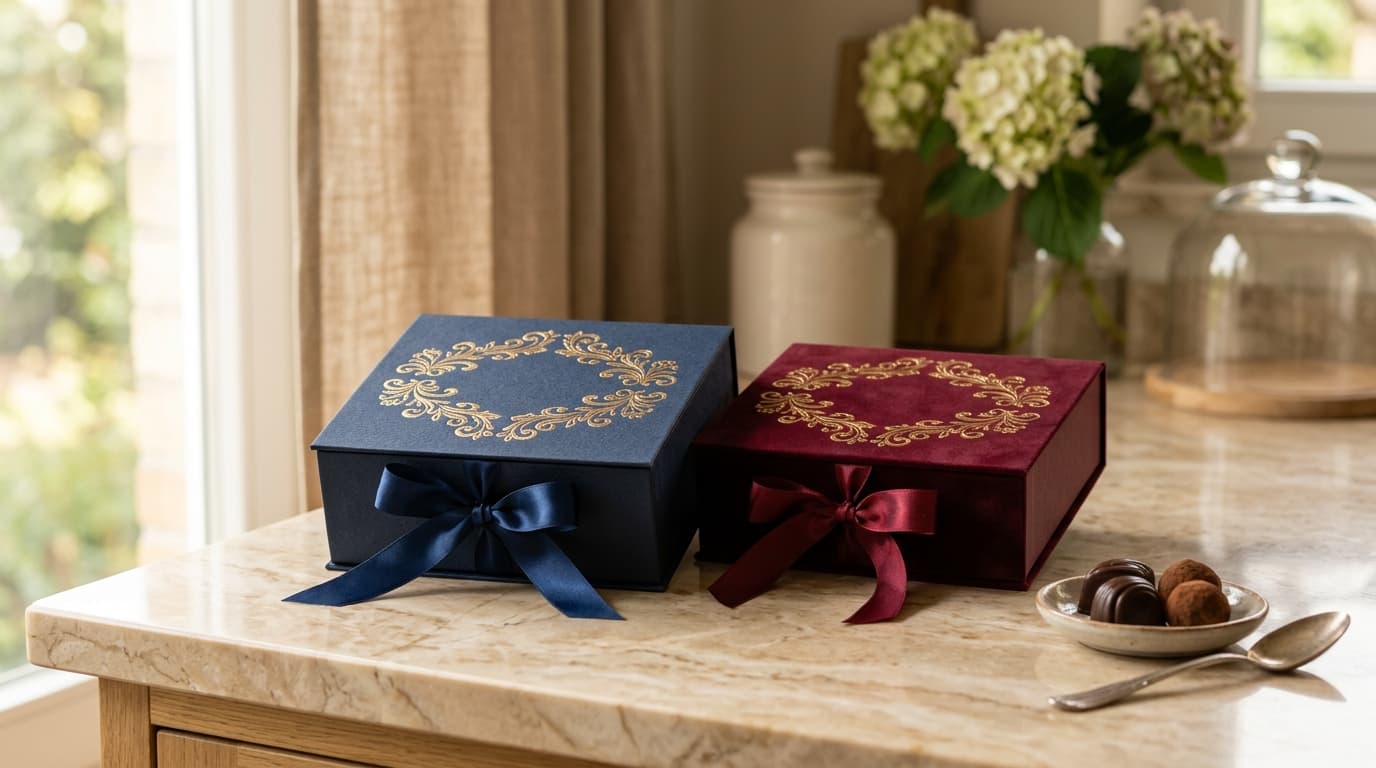
In front of two neighbouring windows, the same question always comes up: Neuhaus or Leonidas? Both sell fresh Belgian pralines, but not at the same price or for the same moments. The short rule: Neuhaus to give, Leonidas for everyday and large quantities. Here's how to decide for good.
Neuhaus or Leonidas: which one to choose by occasion?
Start from the occasion, not the brand. For a gift that has to land, Neuhaus wins hands down; to treat yourself day to day or fill a big box to share, Leonidas is unbeatable.
Both houses play on the same base — the fresh filled praline, sold by weight — but with two philosophies. Neuhaus looks after the gift object: unmistakable ballotin, reputation, consistency. Leonidas built its fame on accessibility, with the densest shop network in Belgium and by-weight prices that make the treat almost ordinary.
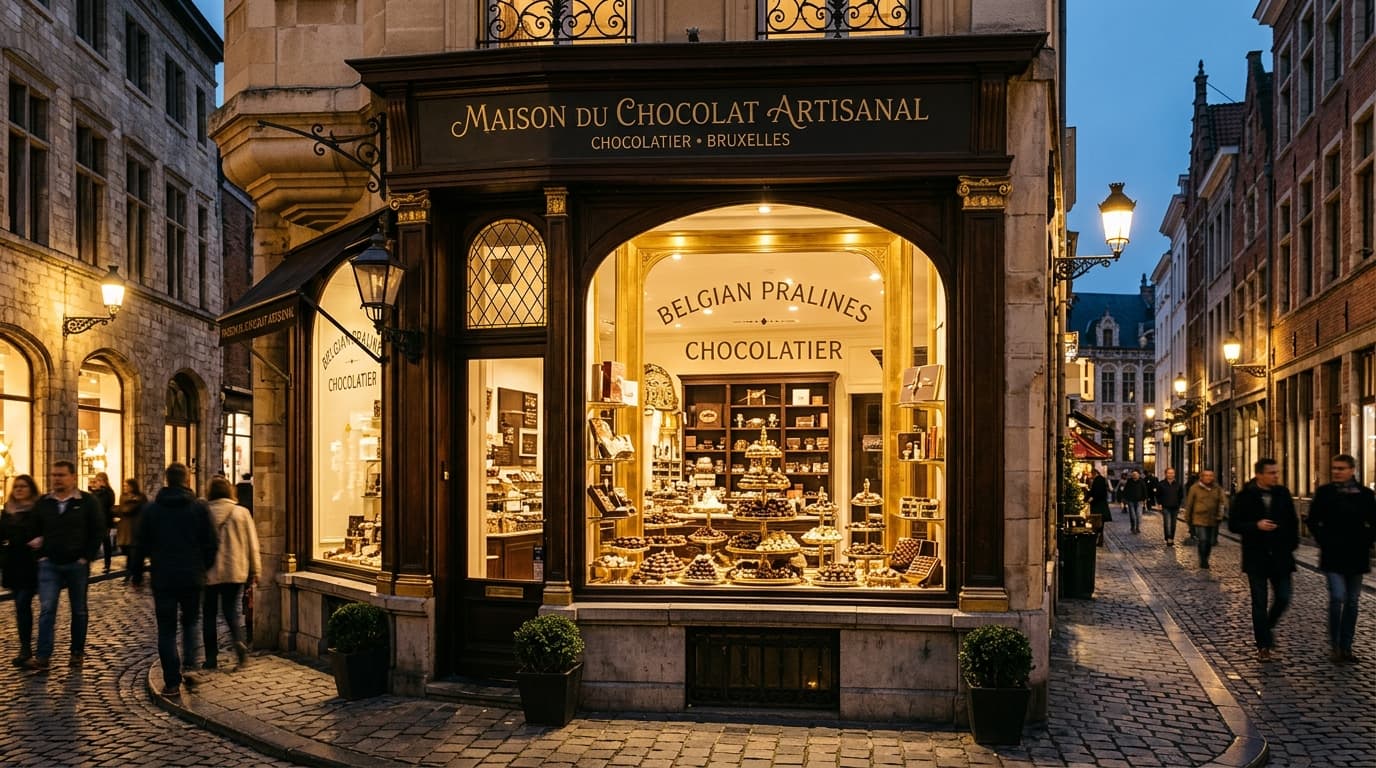
In the window, it shows at once: at Neuhaus the display is hushed, prices marked discreetly; at Leonidas they happily hand you a bag to fill yourself, praline by praline. We tasted both a few days apart, and the verdict depends less on pure flavour than on what you're after that day.
What really sets Neuhaus apart from Leonidas?
History and positioning, above all. Neuhaus, founded in 1857, invented the fresh filled praline in 1912 and then the ballotin in 1915: it's the historic house, the one that created the category. Leonidas came a little later.
Its founder, Leonidas Kestekides, a confectioner of Greek origin born in 1882, won a bronze medal for chocolate in Brussels as early as 1910, then settled in Belgium. Over four generations, the family turned it into a popular business with a simple idea: pralines for everyone, every day. Where Neuhaus invented accessible luxury, Leonidas invented democratic chocolate.
At tasting, this difference in intent shows up on the plate: Neuhaus works finer, more consistent fillings, while Leonidas embraces the generous, sweet praliné that pleases the widest crowd. Neither cheats on freshness — the choice is decided elsewhere.
Is Leonidas really twice as cheap?
Yes, and sometimes more. By weight, Leonidas sits around €2.78 per 100 grams, while Neuhaus is closer to €7.20 per 100 grams — climbing up to €14.50 per 100 grams in a gift box (prices recorded in Belgium in 2024).
Translated into boxes, the gap is striking: 100 grams of Neuhaus costs about as much as a 250-gram ballotin of Leonidas. A luxury box's packaging weighs heavily in the bill, at both houses, hence the reflex to remember: buying by weight cuts the total by half to two thirds.
Does Neuhaus justify its premium price?
Yes, if you're buying a gift or consistency. What you pay for at Neuhaus, beyond the chocolate, is reliability: a ballotin given to in-laws or a client always makes a good impression, with no risk of a false note.
The house bets on the finesse of its fillings, a readable range and packaging that is part of the pleasure. It's the very definition of the gift that isn't up for debate: no one has ever been disappointed to receive a Neuhaus. For everyday use, though, the price becomes hard to defend against Leonidas.
Which praline should I try first at each?
Start with their respective signature — it's the best judge. At Neuhaus, ask for the coffee manon: fresh cream and coffee, it sums up the house style, all finesse. It's the test I run at every new shop.
At Leonidas, try a house praline or the white manon, fresh cream under a white chocolate shell — that's where the pleasure-to-price ratio shows best, and often the first praline you go back for. To dig into that specialty, our guide to the coffee manon at Leonidas, Mary and Neuhaus compares the versions house by house.
The reflex to avoid: judging a house on a cellophane-wrapped assortment grabbed at a station. A praline is tasted fresh, by the piece, in the days after buying — not at the bottom of a box forgotten for three weeks.
Where to buy Neuhaus and Leonidas in Belgium?
Almost everywhere, with one nuance. Leonidas has the densest network in the country: stations, shopping streets, Brussels airport, and even factory outlets where the by-weight price drops further still. It's hard to walk ten minutes in a Belgian city without passing one.
Neuhaus is more selective: polished boutiques in galleries and shopping avenues, a strong presence at the airport and in upscale transit spots. If you're after a last-minute gift before a flight, both are easy to find in the Brussels-National terminal — we cover it in our guide to buying Belgian chocolate at Brussels airport.
And if you want to go a notch higher: Pierre Marcolini
Above the Neuhaus-Leonidas duel, one house changes the field: Pierre Marcolini. A bean-to-bar maison in the Sablon, it selects and roasts its own beans, which neither Neuhaus nor Leonidas do at that scale, for a more pronounced flavour profile and a higher price.
It's not the same purchase: Marcolini is saved for the exceptional occasion or the curious enthusiast, while Neuhaus stays the classic gift and Leonidas the everyday treat. If your question is "which one impresses the most", Marcolini is where to look — our comparison of which Belgian chocolatier to choose puts the three houses in their place.
| Criterion | Neuhaus | Leonidas |
|---|---|---|
| Price by weight | ~€7.20 / 100 g | ~€2.78 / 100 g |
| Price in a box | up to €14.50 / 100 g | gentle, often half as much |
| Style | Fine, historic praline | Generous, accessible praline |
| To give | Excellent | Good |
| Everyday | Pricey | Ideal |
| Network in Belgium | Selective, polished | The densest in the country |
Not sure what kind of chocolate lover you are before pushing the door open? Test yourself with our chocolate quiz.
Chocolatiers & maisons comparator
Compare all chocolatiers & maisons side by side.
Compare now →
Frequently asked questions
Bruxelloise pur sucre, Margaux arpente les chocolateries belges depuis plus de dix ans. Ancienne pâtissière reconvertie dans le journalisme gourmand, elle goûte, compare et raconte le chocolat belge sans complaisance — des grandes maisons aux ateliers de quartier.