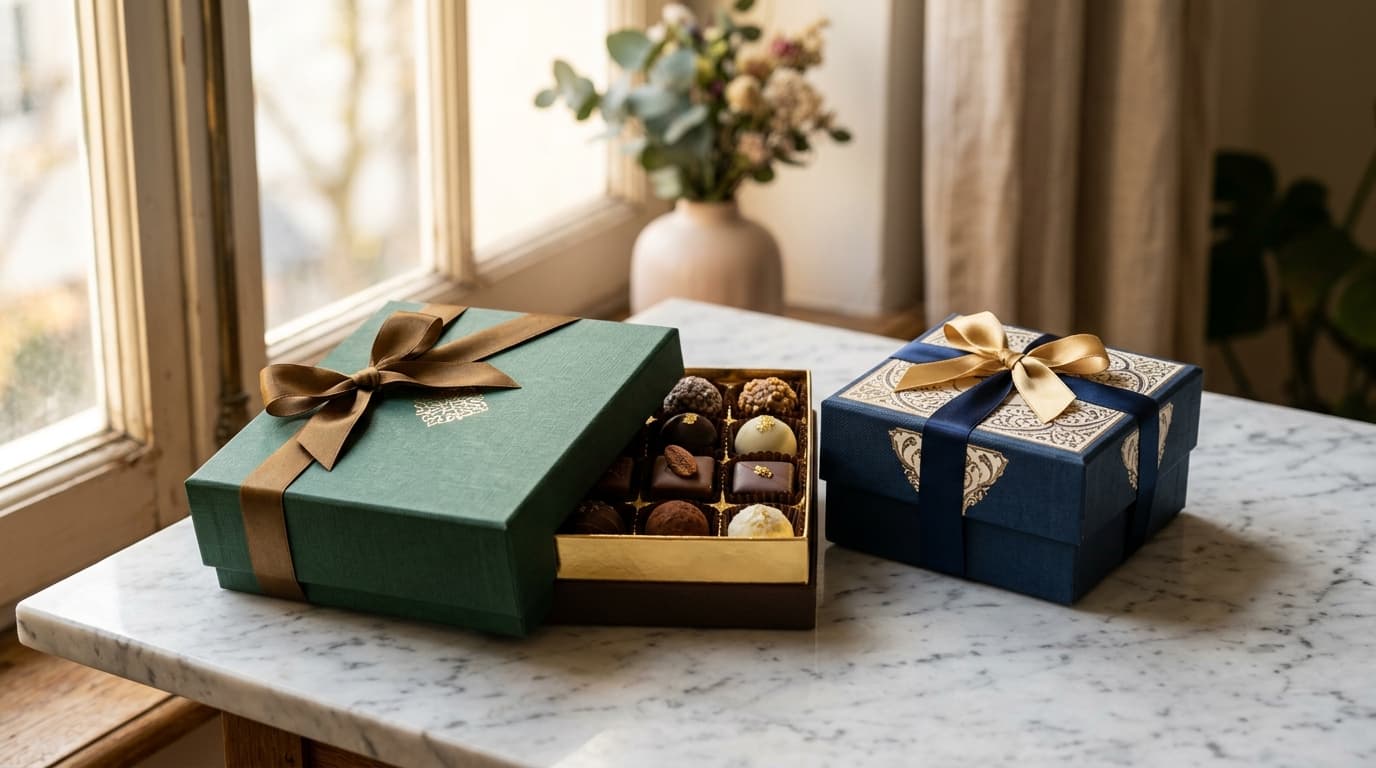
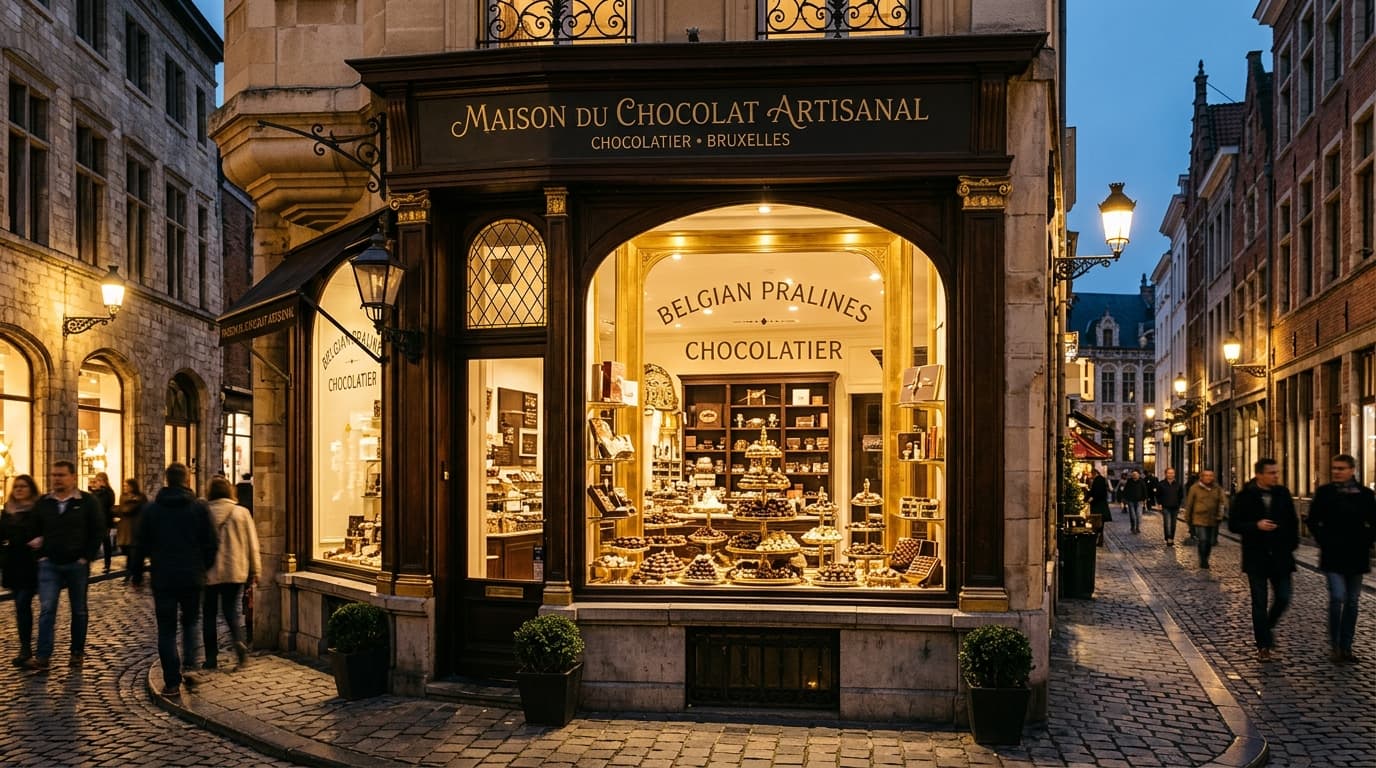
Wittamer and Pierre Marcolini face each other on the Place du Grand Sablon, just metres apart. Two houses of excellence, two visions of Belgian chocolate. For a gift that makes a statement or the finesse of cocoa, we lean towards Marcolini; for tradition and pastry, Wittamer keeps the edge. Here's how to decide.
What really sets Wittamer and Pierre Marcolini apart?
A few metres of cobblestones separate them, yet almost everything sets them apart. Wittamer is a great traditional house, founded in 1910 and a royal warrant holder since 1999; Pierre Marcolini is a modern chocolatier, first shop in 1995, who moved to bean-to-bar from 2001 — he makes his own chocolate from bean to bar.
The history adds spice to the rivalry. Before opening across the way, Pierre Marcolini trained at Wittamer. Setting up his first shop just metres from his former house is something he calls "the war" of the Sablon, with a grin. The result: two philosophies sharing the same square.
In the window, the difference is obvious. At Wittamer, you find pastries, macarons, butter sablés and pralines, including surprising pepper pralines. At Marcolini, the display is more pared-back: origin bars, graphic boxes, ganache squares. Two ways into Belgian chocolate.
Wittamer: why is this Sablon house a reference?
For its tradition and the breadth of its craft. With over a hundred years of history and a royal warrant since 1999, Wittamer reassures: it's the "safe Belgian" gift that pleases everyone, from in-laws to a passing client.
The house is more than a chocolatier. It's a full pastry-and-chocolate house, where classic ganaches sit alongside macarons, cakes and the famous butter sablé. We tasted the sablé for you: it's exactly the kind of small pleasure that brings you back, beyond the pralines alone.
On the chocolate side, Wittamer bets on well-made classics rather than flavour daring. The pepper pralines, though, stand out and make a nice surprise for an enthusiast already tired of sweet ganaches. It's a house of consistency, not provocation.
Is Pierre Marcolini the sharpest on cocoa?
Yes, and that's where he clearly dominates. Marcolini has worked bean-to-bar since 2001: he selects and roasts his own beans, by origin, something very few Belgian chocolatiers do at this scale. For the finesse and traceability of cocoa, he's the Sablon reference.
In practice, that gives chocolates with a marked flavour profile, sometimes tangy or fruity, far from the classic sweet praline. At tasting, the same square can evoke roasted hazelnut or red fruits depending on the bean origin. It's a chocolate to savour square by square, almost like a wine.
The test to run in store: start with a plain ganache before the more elaborate creations. It tells you everything about the cocoa work. The price rises accordingly — it's the pricier of the two — but that's also what makes it an exceptional gift for a curious enthusiast.
Which one to choose for an exceptional gift?
To make a statement with a demanding enthusiast, Marcolini comes first. A signature box, origin bars, graphic packaging: the gift stands out and tells a cocoa story. It's the choice that impresses someone who already knows classic Belgian chocolate.
Wittamer, meanwhile, wins on the institutional, heritage gift. The royal warrant reassures, the packaging breathes tradition, and the house appeals to a broad audience without taking risks. For a corporate gift or a token for hosts you barely know, it's the safe bet.
✓ Pros
- Marcolini: single-origin cocoa and marked flavour profile
- Marcolini: graphic boxes that stand out
- Wittamer: reassuring royal warrant status
- Wittamer: full pastry house beyond pralines
✗ Cons
- Marcolini: the pricier one, flavours sometimes divisive
- Wittamer: more classic chocolates, less daring
Wittamer or Marcolini: which one is more expensive?
Both are high-end, but Marcolini sits a notch above on his signature boxes. In June 2026, a bean-to-bar box starts around €45, while a 250 g Wittamer ballotin lands closer to €20-30 depending on the selection. The gap widens on origin bars and limited editions.
That gap isn't just about image. At Marcolini, you pay for a full chain, from bean to square, and sourcing by origin. At Wittamer, the price covers a broad pastry-and-chocolate craft, but on a raw material that is bought, not transformed from the bean.
| Criterion | Pierre Marcolini | Wittamer |
|---|---|---|
| Style | Single-origin bean-to-bar | Pastry tradition |
| Founded | 1995 | 1910 |
| Signature | Single-origin bars, ganache | Macarons, pepper pralines, sablé |
| Price | €€€€ | €€€ |
| Royal warrant | No | Yes (since 1999) |
| To give | Exceptional gift, finesse | Safe choice, tradition |
Marcolini to wow an enthusiast, Wittamer to reassure everyone: the right pick depends on who opens the box.
Still hesitating with Neuhaus or Mary?
If the Sablon rivalry leaves you undecided, two other houses are worth a detour. Neuhaus, inventor of the filled praline in 1912, remains the great historic reference for a classic, unmistakable ballotin. Mary, a royal warrant holder like Wittamer, takes particular care of the packaging and the gift spirit.
The right instinct: start from the occasion, not the brand. For finesse and origin, Marcolini; for royal tradition, Wittamer or Mary; for the safe classic ballotin, Neuhaus. To sweep all the great houses at once, our which Belgian chocolatier to choose comparison sets Marcolini, Neuhaus and Leonidas head to head.
How to decide by occasion?
The rule fits in one sentence: choose based on who opens the box. For a curious enthusiast or a gift that must stand out, Marcolini and his single-origin cocoa. For a traditional gift that pleases everyone, Wittamer and its royal warrant. On the Sablon, you have both within a few steps.
Want to know what kind of chocolate lover you are before pushing open a shop door? Test yourself with our chocolate quiz.
Chocolatiers & maisons comparator
Compare all chocolatiers & maisons side by side.
Compare now →
Frequently asked questions
Bruxelloise pur sucre, Margaux arpente les chocolateries belges depuis plus de dix ans. Ancienne pâtissière reconvertie dans le journalisme gourmand, elle goûte, compare et raconte le chocolat belge sans complaisance — des grandes maisons aux ateliers de quartier.