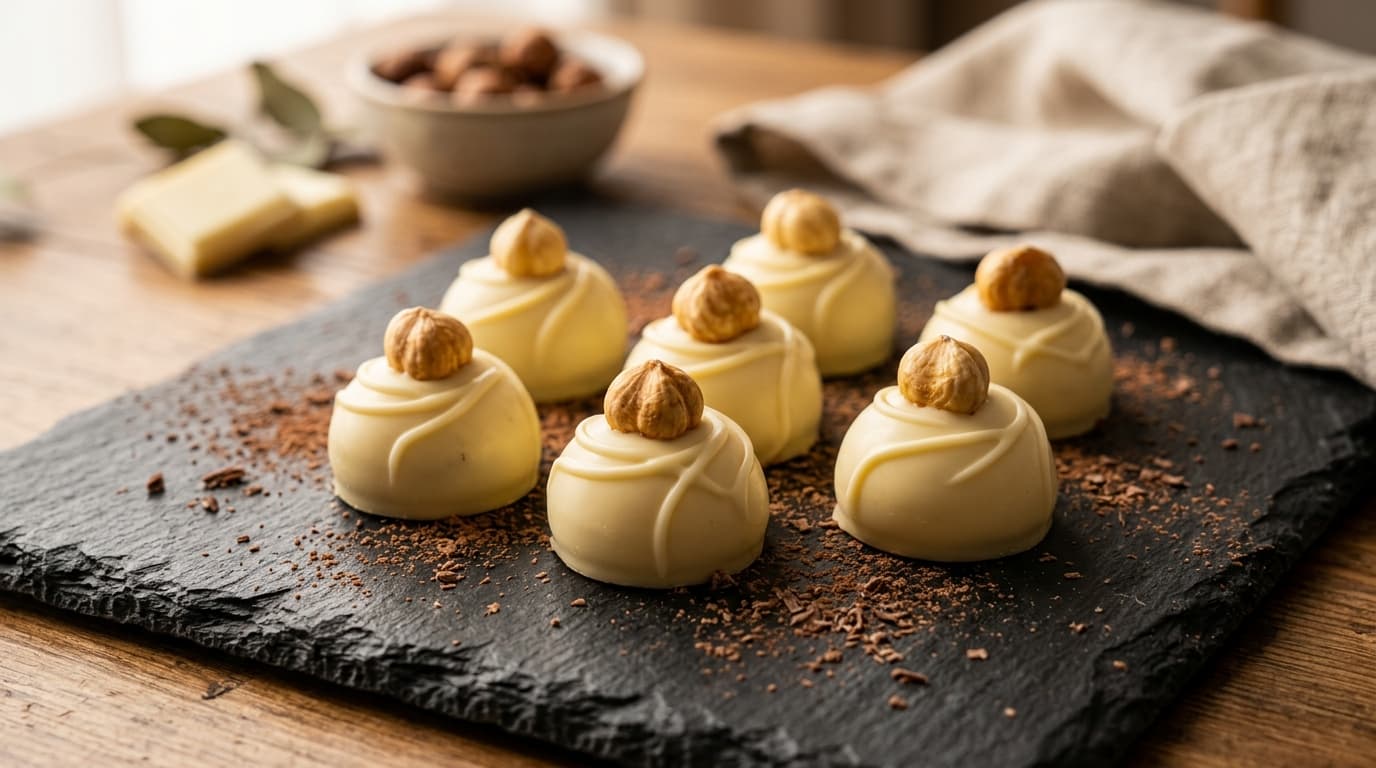
In the window, the manon café is easy to spot: a large, domed white praline, topped with a hazelnut. For many Belgians it's the chocolate of childhood, yet not every house makes the same version. Leonidas, Mary, Neuhaus: here is which one to choose depending on what you're after.
What is a real manon café?
A manon café is a heart of coffee-flavoured buttercream, set on a thin layer of praline, with a whole hazelnut in the middle, all coated in white chocolate. Its size — two to three bites — and its fresh cream clearly separate it from a classic praline.
The buttercream is the key. Whipped, airy, just sweet, it melts in the mouth while the hazelnut crunches. It's a fragile balance: too much sugar and the manon cloys, too little coffee and it falls flat. At tasting, a good manon leaves a clear coffee bitterness behind the sweetness of the white.
Where does the manon come from, and who invented it?
The manon was born in the Leonidas tea room in Blankenberge in the 1930s. The Kestekidès family, founders of the Leonidas house, dreamed it up on the Belgian coast and named it after a young woman loved by Basile Kestekidès, the pastry chef.
This lineage explains why, to this day, the manon stays tied to Leonidas in Belgian minds. But the recipe spread: most traditional chocolatiers now offer their own manon, with their own balance of coffee and butter. That's exactly what makes the comparison worthwhile.
Does the Leonidas manon still lead the pack?
Yes, for pleasure-to-price, Leonidas remains unbeatable on the manon. It's the house that invented it, and its white manon café is generous, fresh, sold everywhere by weight at a far gentler price than its rivals.
The cream is honest, the coffee present, the hazelnut crunchy. We tasted a ballotin bought at the station for you: the freshness was there, without the finesse of a high-end artisan. It's the childhood manon, the one you buy by the box of twenty without thinking about the budget.
The Leonidas manon isn't the finest, but it's the truest: the house that invented the recipe still knows how to make it.
Should you prefer the Mary manon?
If you want to give a gift, yes. The Mary house, founded in Brussels in 1919 and holder of a Royal Warrant, works a more refined manon: better-quality fresh butter, more subtle coffee, a less sugary white shell.
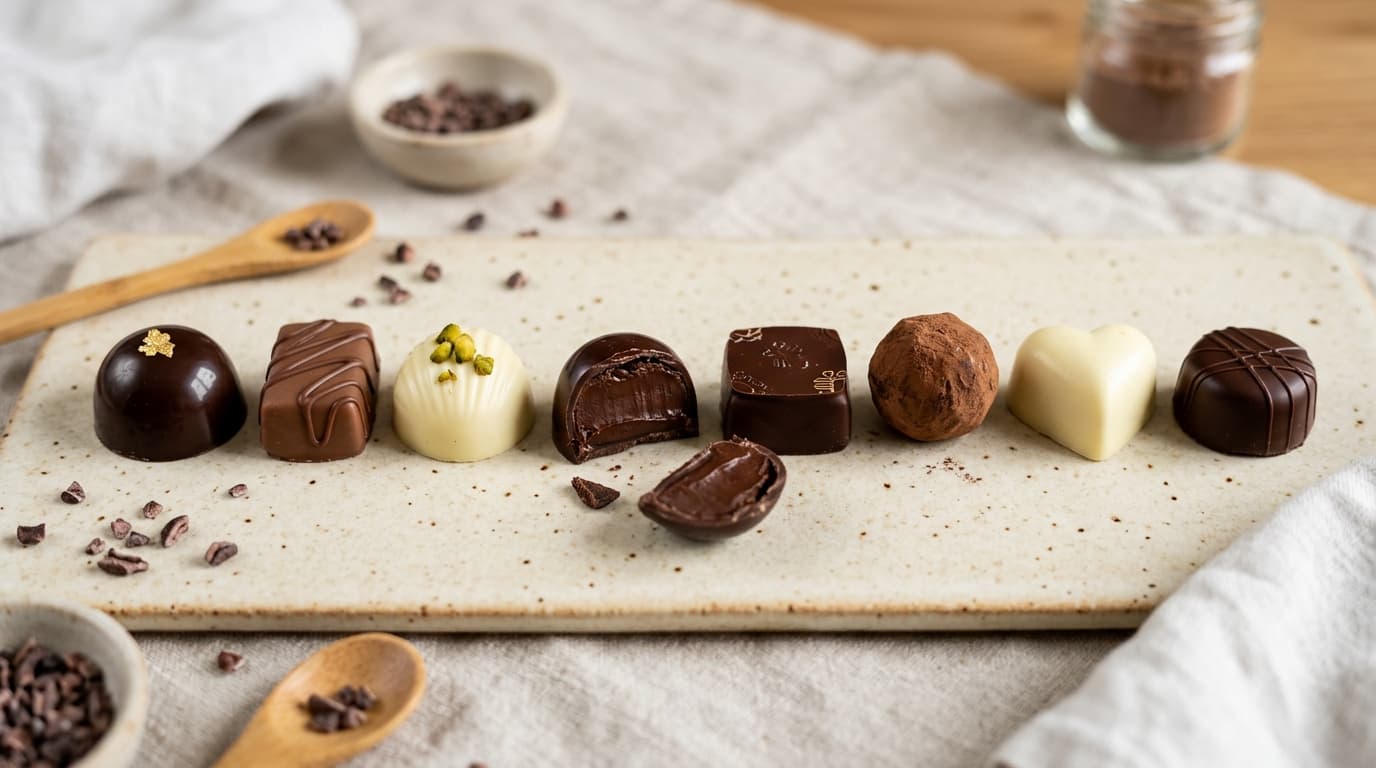
The difference shows at tasting: where Leonidas plays generosity, Mary seeks balance. The manon is a little smaller, pricier, but with an elegance that justifies pushing open the boutique door on rue Royale rather than grabbing a box at the station. It's the manon to set on the table when you have guests.
Does Neuhaus make a manon worthy of its reputation?
Neuhaus offers a correct, reliable manon, but less coffee-forward than the other two. The great historic house — inventor of the filled praline in 1912 — takes care of everything, and its white manon is faultless in the making.
Still, at tasting the coffee fades behind the sweetness of the white chocolate and the praline. It's a more consensual manon, which will please those who find the coffee too marked elsewhere, but slightly disappoints the enthusiast looking for the bitter kick. For a mixed ballotin to give, Neuhaus is a safe choice; for the manon as the star, we prefer Leonidas or Mary.
And what about Pierre Marcolini?
He isn't here, and that's deliberate. Pierre Marcolini, the Belgian benchmark for high-end chocolate and the bean-to-bar house of the Sablon, doesn't make a traditional manon café. His signature is bean work, pure chocolate, precise ganaches — not the generous buttercream that defines the manon.
Forcing him into this comparison would make no sense: the manon isn't his field. If you're after Marcolini finesse, turn to his origin bars or his ganache hearts, not to a manon he doesn't claim. Knowing a house also means knowing what it doesn't do.
White, milk or dark manon: which to choose?
The manon comes in three shells, and the choice changes everything. The white is the classic: soft, indulgent, it lets the coffee speak. The milk rounds the whole thing further, more consensual but less contrasted. The dark, rarer, brings a bitterness that answers the coffee and suits palates who find the white too sweet.
My advice after dozens of tastings: start with the white, the true historic manon, before trying the dark if you like contrast. The milk is a safe bet for children or palates that shy away from bitterness.
Which manon café for which occasion?
The rule is simple: start from the occasion, not the brand. For an everyday treat without overspending, Leonidas. To give or to receive, Mary. For a mixed ballotin that pleases everyone, Neuhaus.
| Criterion | Leonidas | Mary | Neuhaus | Wittamer |
|---|---|---|---|---|
| Style | Generous, honest | Fine, balanced | Safe, consensual | High-end |
| Coffee | Marked | Subtle | Discreet | Precise |
| Price | € | €€€ | €€ | €€€€ |
| To give | Correct | Excellent | Good | Exceptional |
| Everyday | Ideal | Too pricey | Possible | Too pricey |
Want to know what kind of chocolate lover you are before pushing open a shop door? Take our chocolate quiz, or read our comparison of the great houses to choose your Belgian chocolatier.
Pralines & spécialités comparator
Compare all pralines & spécialités side by side.
Compare now →
Frequently asked questions
Bruxelloise pur sucre, Margaux arpente les chocolateries belges depuis plus de dix ans. Ancienne pâtissière reconvertie dans le journalisme gourmand, elle goûte, compare et raconte le chocolat belge sans complaisance — des grandes maisons aux ateliers de quartier.