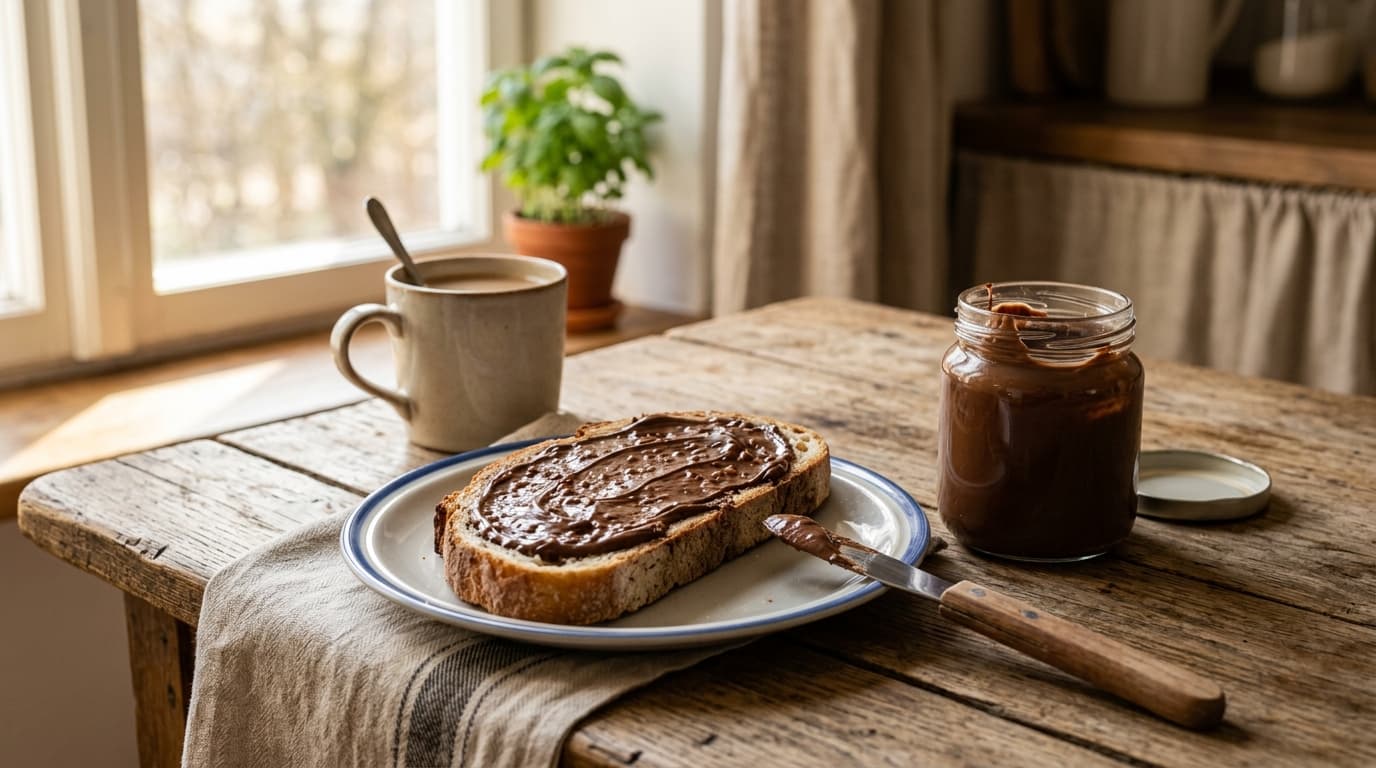
In Belgium we simply call it “choco”, and there is a jar of it in almost every kitchen. But between the Italian giant of the aisle, the spreads made by our own chocolatiers and the own brands that beat the big names blind, the right choice is not obvious. Here is how to decide, starting from the label rather than the advertising.
What is the best chocolate spread?
There isn't one, but three, depending on the use: one for everyday, one for taste, one for ethics.
For everyday, the answer is uncomfortable for the big brands: in the Test-Achats comparison, Boni Selection Choconuts without palm oil (Colruyt) came out on top, ahead of far pricier references. For taste, you have to go up on hazelnut: Galler claims 25% hazelnut in its spread, where a standard jar sits around 13%. For ethics, it's Belvas and Newtree, on organic and fair-trade cocoa.
We opened five jars the same morning, with a teaspoon, no bread so as not to cheat: the gap is never about the chocolate, it is about the hazelnut. That is what gives length on the palate; the rest is sugar and fat.
How do you read a chocolate spread label?
Three figures are enough, and they are all on the jar.
The hazelnut content first: below 15%, you are mostly eating flavoured sugar. Above 20%, the texture changes, denser, less artificially melting. Then the order of ingredients: if sugar is first and oil second, everything is said. Finally the length of the list: five or six ingredients are enough to make a good spread. Beyond that, you are paying for flavourings and emulsifiers.
Which chocolate spreads offer the best value for money?
Own brands — and that is not an opinion but a test result. When a panel tastes blind, the label protects no one: Boni Selection without palm oil topped the Test-Achats comparison with a score of 66/100, while costing clearly less than the big names.
The maths is simple for a family emptying a jar a week: between an own brand at around €3 to €5 per 400 g and a big brand at nearly double, the gap runs to tens of euros a year. For a small taste difference, that is money left on the table.
Which chocolate spreads use better cocoa?
The ones that come from chocolatiers, logically. A supermarket spread is first a sugar-and-hazelnut product where cocoa plays a supporting role. When a chocolate house takes it on, the ratio flips.
Côte d'Or offers its spread in milk and dark versions: the second, more bitter, is the only one in the aisle that really tastes like a melted bar. Galler built its recipes from the profile of its best-known chocolates, with that 25% hazelnut that changes everything at tasting. We compared them on the same slice: the dark Côte d'Or wins on cocoa, the Galler on hazelnut. Two different pleasures, no loser.
And Kwatta? That is the Belgian childhood choco, sweeter, less nutty. You keep it out of nostalgia, not for the cocoa.
Which chocolate spreads are the most ethical?
Two Belgian houses stand out, and they are not the best known. Belvas, the Hainaut chocolate maker, works with 100% organic and Fairtrade cocoa. Newtree built its range on functional chocolates and claims a spread with no added oil — a rare technical feat in this aisle.
The rest of the market is improving, but collectively: the big Belgian brands move through Beyond Chocolate, the partnership launched in 2018, aiming for chocolate produced and sold in Belgium to be covered by a certification (Fairtrade, Rainforest Alliance) or a supply-chain programme. Real progress, but it does not tell one jar from another on the shelf.
| Criterion | Boni Selection | Côte d'Or | Galler | Belvas / Newtree |
|---|---|---|---|---|
| Price | € | €€ | €€€ | €€€ |
| Cocoa taste | Average | Strong (dark version) | Strong | Strong |
| Hazelnut | Decent | Discreet | 25% claimed | Variable |
| Cocoa ethics | Beyond Chocolate | Beyond Chocolate | Fair-trade cocoa | Organic + fair trade |
| For whom | Everyday | Cocoa lovers | The weekend | A clear conscience |
Should you prefer a palm-oil-free spread?
Yes, but for the right reasons. The argument is environmental — deforestation, monoculture — not dietary: a palm-oil-free spread is still a very sweet, very fatty product.
The good news is that you no longer pay for the choice: the best scores in Belgian tests go precisely to palm-oil-free recipes, including own brands. There is no longer a trade-off to make between your wallet, your taste and the forest.
What about homemade chocolate spread?
It solves the sugar problem, not the time one. A good homemade spread is roasted hazelnuts blended long enough to release their oil, melted dark chocolate, a pinch of salt. Nothing else.
The result is denser, less smooth, frankly more cocoa-forward — and it sets in the fridge, which surprises you the first time. It is excellent, but it does not replace the jar in the cupboard: it is a spreadable gianduja, in other words another product.
Want to know what kind of chocolate lover you are? Take our chocolate quiz — and for the next aisle over, we compared the best Belgian supermarket chocolate.
Pralines & spécialités comparator
Compare all pralines & spécialités side by side.
Compare now →
Frequently asked questions
Bruxelloise pur sucre, Margaux arpente les chocolateries belges depuis plus de dix ans. Ancienne pâtissière reconvertie dans le journalisme gourmand, elle goûte, compare et raconte le chocolat belge sans complaisance — des grandes maisons aux ateliers de quartier.