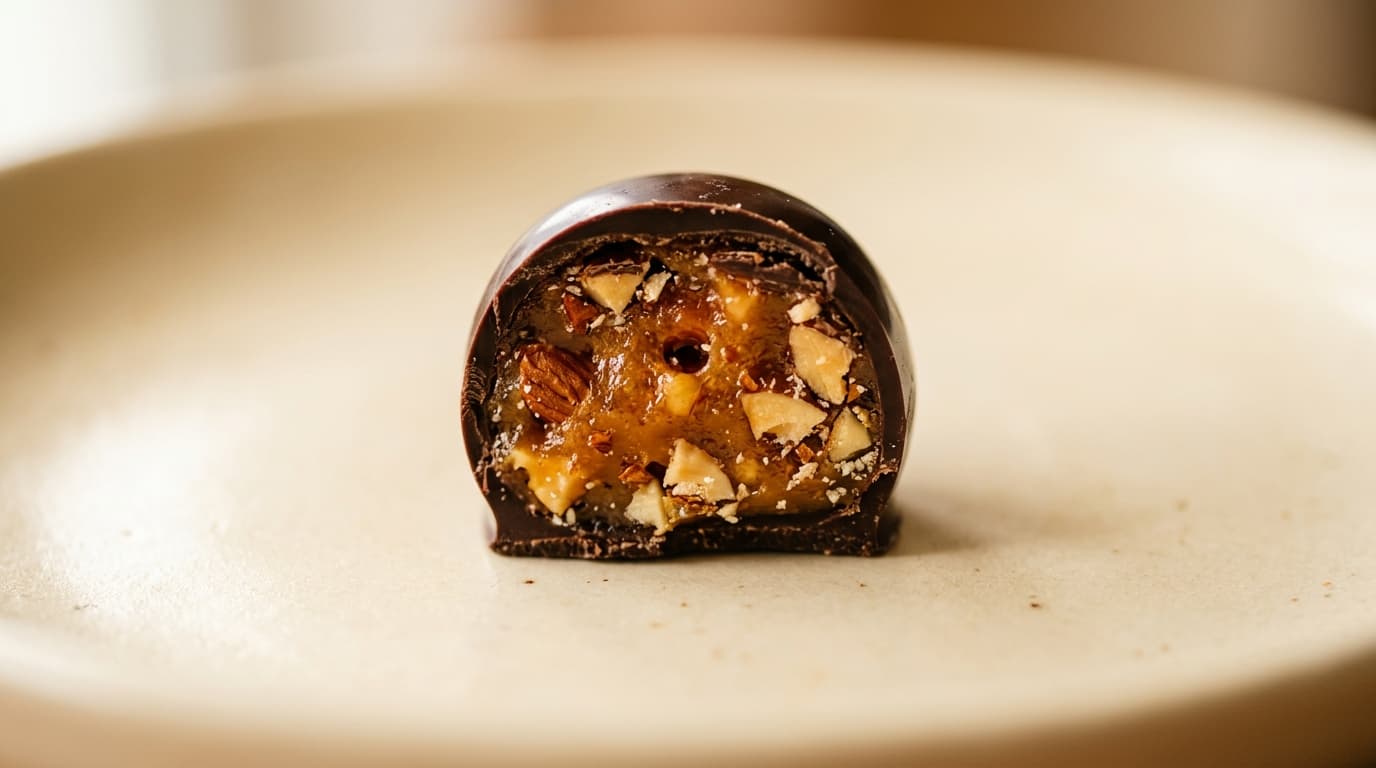
The chocolate snack bar is the chocolate we eat standing up: on the train, at the desk, between errands. In Belgium it has one peculiarity — our chocolatiers took it on, and the result has little to do with the international confectionery in the next aisle. Here is how to choose.
What are the best chocolate snack bars?
Let's start with the distinction that changes everything: there are chocolatier bars and confectioner bars.
A chocolatier's bar starts from chocolate and adds a filling. A confectionery bar does the opposite: it starts from caramel, biscuit or nougat, and coats it in a layer of chocolate. Both have their place, but you are not judging the same things.
On the chocolatier side, Galler's filled sticks lead: the Liège house transposed its praline recipes into a portable format, with a fine shell and a filling less sweet than average. Côte d'Or follows with its filled sticks and mignonnettes, those little milk rectangles that fill every Belgian lunchbox. And Jacques offers generous filled bars, including the famous banana-cream version.
Which snack bars use the best cocoa?
The ones from a chocolate house, unsurprisingly. An industrial confectionery bar often carries a very thin chocolate layer over a sugary core; cocoa there is a finish, not a central ingredient.
At Galler, the logic flips: the stick is a chocolate that has been filled, and you hear it when it snaps. At Côte d'Or, the dark version of the sticks delivers an intensity few bars in the aisle offer. We tasted them side by side with two classic international bars: the gap is not in the filling, it is in the shell. Where one snaps, the other clings to your teeth.
Pierre Marcolini is not on this field — it is not his trade, and we are not going to summon him here artificially.
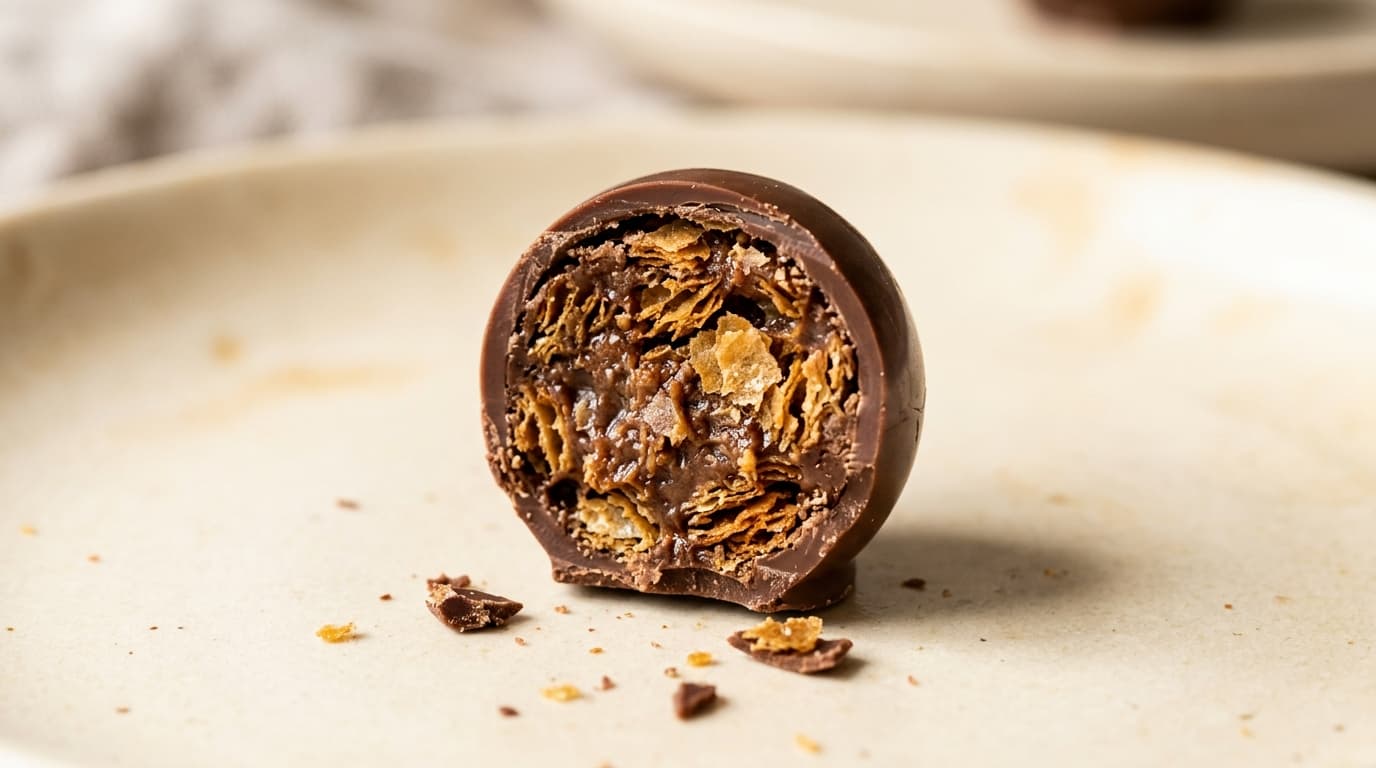
Which snack bars offer the best value for money?
Multipacks, by a long way. A Côte d'Or mignonnette bought singly at a station costs three to four times its supermarket multipack price. For a family filling lunchboxes five days a week, the annual gap is considerable.
The reasoning holds on quality too: at equal budget, a multipack of Belgian sticks made with 100% cocoa butter beats a confectionery bar sold by the unit. You win on both counts, which is rare enough to point out.
| Criterion | Galler | Côte d'Or | Jacques | Tony's / Belvas |
|---|---|---|---|---|
| Type | Chocolatier's filled stick | Stick, mignonnette | Generous filled bar | Ethical bar |
| Price | €€ | € | € | €€€ |
| Cocoa | Strong, fair trade claimed | Solid | Decent | Strong, traceable |
| For whom | The treat snack | Lunchboxes | Generous snacking | A clear conscience |
Which snack bars are the most ethical?
Tony's Chocolonely built its entire business on this question: traceable cocoa, the fight against forced labour, a guaranteed price to farmers. It is not a Belgian brand, but it is the aisle's benchmark on this criterion, and it forced the whole sector to take a position.
On the Belgian side, Belvas remains the most demanding, on 100% organic and Fairtrade cocoa. Galler claims fair-trade cocoa, and Côte d'Or moves through Cocoa Life and the Beyond Chocolate partnership, launched in 2018, committing the Belgian sector to cover its chocolate with a certification or a supply-chain programme.
Which bars for snacks and lunchboxes?
Mignonnettes, rather than a full-size bar. The portion is right, the per-piece cost lower, and above all the child doesn't leave a melted half-bar at the bottom of the school bag.
The rule we apply at home: a Côte d'Or mignonnette on school days, a filled Galler stick on the day off. The first is a routine pleasure, the second a small event — and children tell the difference perfectly, which proves it exists.
Want to step up on chocolate? Our comparison of the best Belgian chocolate bars takes over when a snack bar is no longer enough.
Pralines & spécialités comparator
Compare all pralines & spécialités side by side.
Compare now →
Frequently asked questions
Bruxelloise pur sucre, Margaux arpente les chocolateries belges depuis plus de dix ans. Ancienne pâtissière reconvertie dans le journalisme gourmand, elle goûte, compare et raconte le chocolat belge sans complaisance — des grandes maisons aux ateliers de quartier.