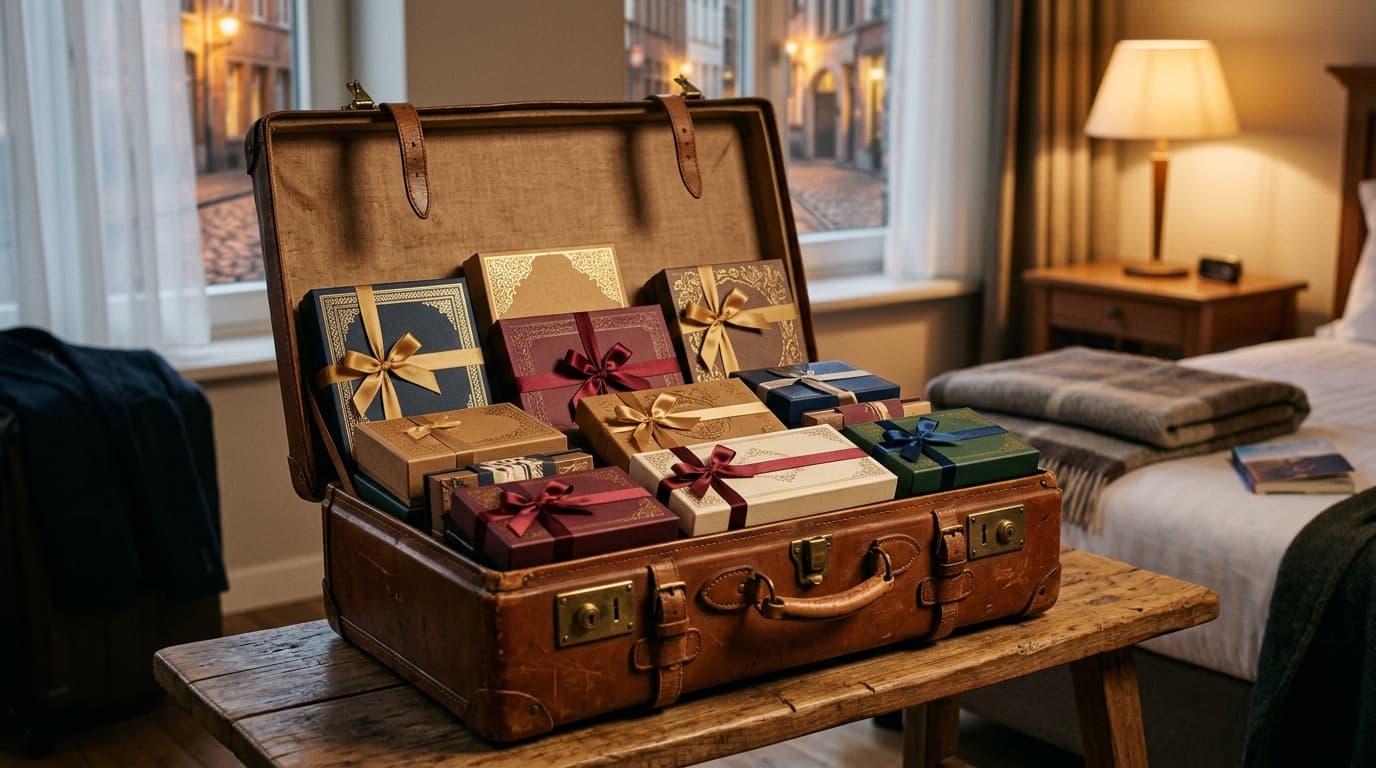
If you only remember one thing: bring back fresh pralines, not bars. The filled praline is the Belgian invention par excellence, born at Neuhaus in 1912, and it's what you can't find anywhere else. All that's left is to choose the house — Neuhaus, Leonidas or Pierre Marcolini — based on your budget and who you're giving it to.
Which Belgian chocolate should you bring back first?
Fresh pralines, sold by weight in a ballotin. It's the one thing you truly can't find outside Belgium.
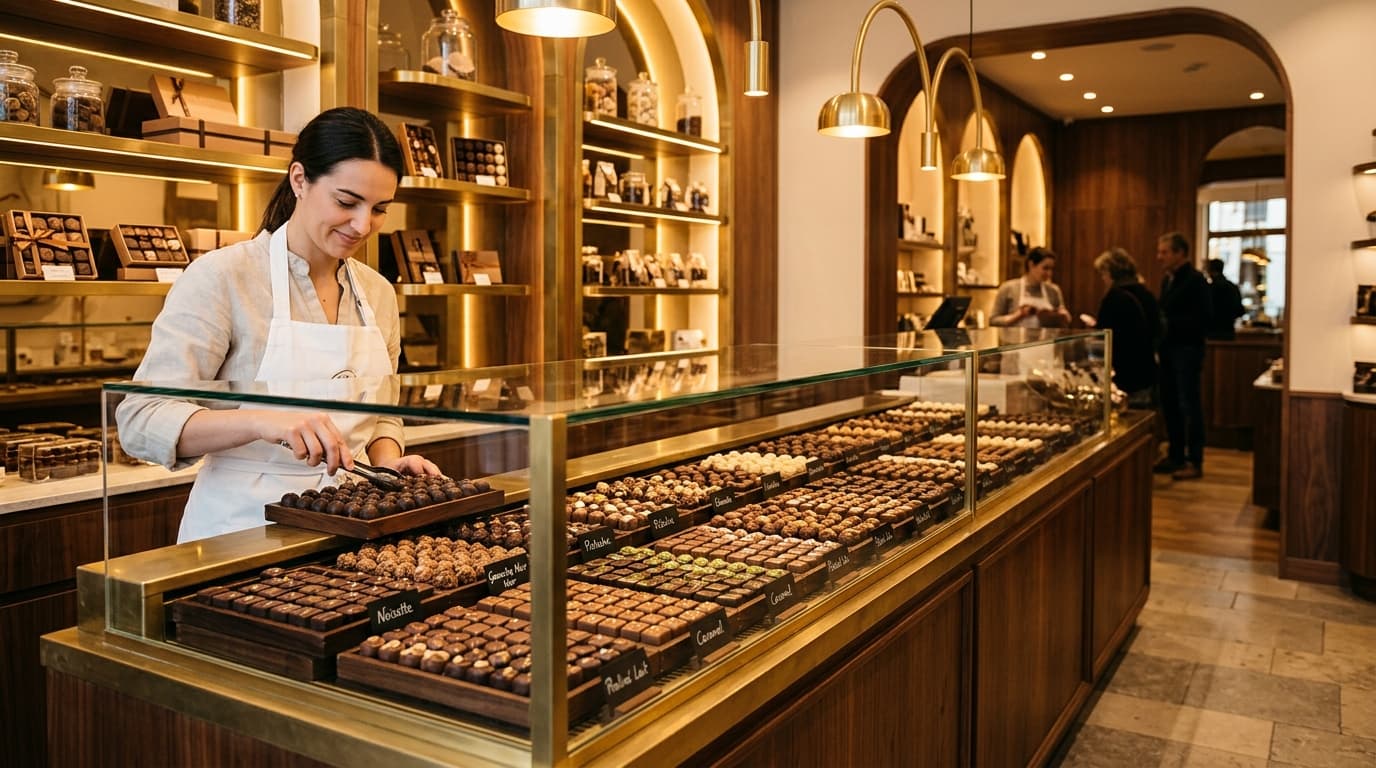
The filled praline — a chocolate shell packed with ganache, praliné or gianduja — is a Belgian speciality the great houses make in small batches, often the same day. The bar, by contrast, sells worldwide: bringing back a Côte d'Or in your suitcase is sweet, but there's nothing exclusive about it. In the window, the difference is obvious: pralines are bare, dated, lined up on trays, and an assistant weighs them out in front of you.
We ran the test at tasting: a fresh ballotin bought on rue au Beurre in the morning, opened at home that same evening, is nothing like an industrial box under cellophane. The ganache melts, the praliné crunches. That's the souvenir that sticks.
Pierre Marcolini, Neuhaus or Leonidas: which brand to choose?
These three houses cover almost every situation, but each rules one specific use. Here's how to decide.
Pierre Marcolini is the exceptional souvenir. The Sablon house works bean-to-bar: it selects and roasts its own beans, giving chocolates with a marked profile, sometimes fruity or tangy, far from the classic sweet praline. It's the gift for a true enthusiast, or the treat you save for yourself, square by square. The price follows, but the name impresses most when the box is opened.
Neuhaus is the safe gift. A great historic house, the classic praline, packaging you'd recognise anywhere: the ballotin that makes a good impression on in-laws or a colleague, without ever disappointing. We tasted the coffee manon for you — fresh cream and coffee — which sums up the house style on its own.
Leonidas is the smart choice when quantity matters. The house democratised the praline: you'll find it in almost every station, at a per-kilo price far gentler than its rivals, and it makes its pralines fresh every day, with no palm oil. To fill a big box to share with family, it's unbeatable.
Which chocolate to bring back on which budget?
The range is wide, from the supermarket square to the artisan's ballotin. At a chocolatier, expect €8 to €15 per 100 g; a quality bar in a supermarket costs €3 to €5. Here's how to split it.
| House | Indicative price /100 g | Bring back for |
|---|---|---|
| Pierre Marcolini | €€€€ (€12–15) | An exceptional gift, an enthusiast |
| Wittamer, Mary | €€€ | Top-end Brussels, a smart gift |
| Neuhaus | €€€ (€6–8) | The classic ballotin that never misses |
| Leonidas | €€ (€4–5) | The big box to share with family |
| Côte d'Or, Galler | € (bar) | A quick fix, to nibble on the train |
Two houses deserve a separate mention: Wittamer, holder of a Royal Warrant, and Mary, another royal chocolatier — two safe top-end bets in Brussels if you want a notch above Neuhaus without going all the way to Marcolini.
Do fresh pralines survive the journey?
Yes, as long as you keep them cool and move fast. Filled chocolate stays stable between 12 and 22 °C, ideally around 15 to 18 °C, and starts to melt above 30 °C.
In practice, a fresh praline is best eaten within two to three weeks. Ganaches and creams age fastest; a praliné or gianduja forgives a few days in a suitcase a little better. The real enemy is heat: I once found a ballotin left an afternoon in a car at 28 °C, the pralines had bloomed white and stuck to the paper. Nothing dangerous, but the look was ruined.
15–18 °C
Ideal temperature
2–3 wks
Praline freshness
+30 °C
Chocolate melts
Should you buy at the airport or in town?
In town, nearly always. The shops at Brussels Airport help the rushed traveller, but you pay for the convenience: at equal freshness, the bill goes up.
The trick is simple: buy your ballotin as late as possible before your flight, in a city-centre shop — rue au Beurre, the Sablon or near the Grand-Place in Brussels, or any station for Leonidas. You gain in freshness and often on price. If your timing really leaves you stuck, we cover the options in our guide to buying chocolate at Brussels Airport.
Can you bring Belgian chocolate outside the European Union?
Inside the Union, no formalities: chocolate moves freely. Outside the EU it gets a little trickier, but rarely for solid chocolate.
To the United States, the United Kingdom or Switzerland, a box of pralines for personal use clears customs without trouble in the vast majority of cases. Controls mainly target bulk dairy products and large commercial quantities — not a 250 g ballotin in your luggage. If in doubt, keep the chocolate in its original packaging and declare it if asked at customs: a declared souvenir never causes a problem.
Which box to give to which recipient?
The rule that simplifies everything: start from the recipient, not the brand.
For in-laws or a gift that has to land well, a Neuhaus or Wittamer ballotin. For a curious enthusiast who loves discovering flavours, a Marcolini selection. For the whole family, a big Leonidas box to pass around. For an office colleague, a mid-size assortment does the job. And for you, on the train home? A Galler or Côte d'Or bar, to nibble guilt-free.
✓ Pros
- Fresh pralines = a truly Belgian souvenir
- A wide range of budgets
- Travels well if you manage the heat
✗ Cons
- Fragile above 30 °C
- Best eaten within 2-3 weeks
- Pricier at the airport
Want to know what kind of chocolate lover you are before pushing open a shop door? Take our chocolate quiz. And to go deeper on the houses, our full comparison tells you which Belgian chocolatier to choose.
Où acheter comparator
Compare all où acheter side by side.
Compare now →
Frequently asked questions
Bruxelloise pur sucre, Margaux arpente les chocolateries belges depuis plus de dix ans. Ancienne pâtissière reconvertie dans le journalisme gourmand, elle goûte, compare et raconte le chocolat belge sans complaisance — des grandes maisons aux ateliers de quartier.